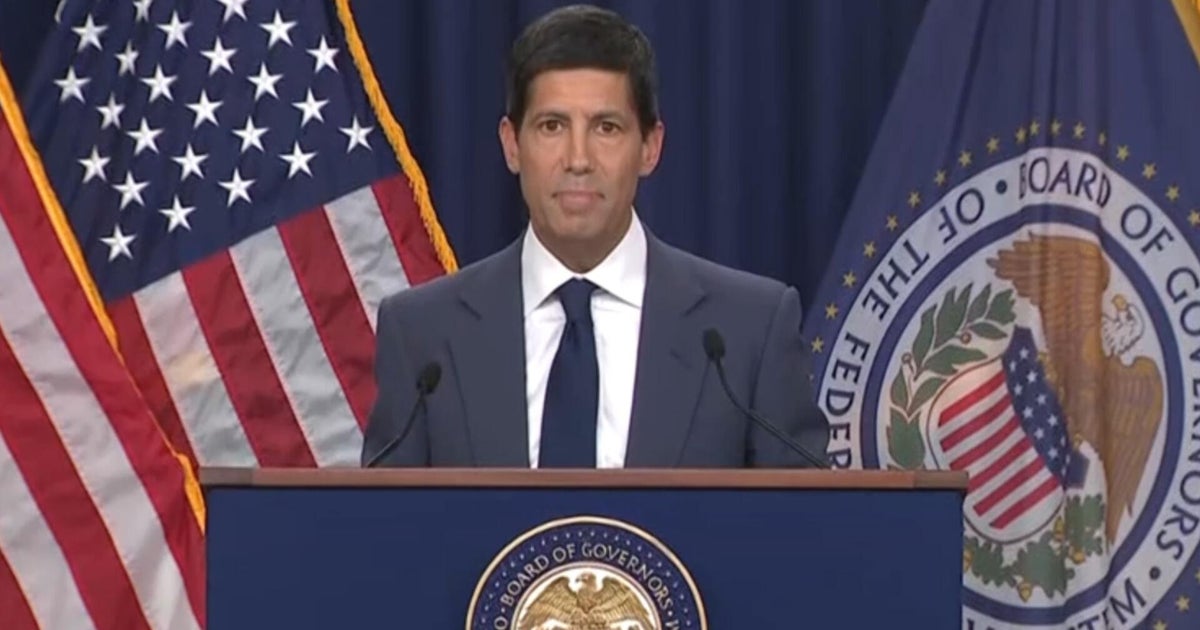
The Federal Reserve held interest rates steady this week under Chairman Kevin Warsh despite persistent inflation, maintaining its September hike as the baseline. Warsh signaled the central bank will reduce rate-setting meetings to seven per year starting in 2027, down from the current cadence, suggesting confidence in stabilization.
Key points
Market impact. The hawkish hold pressures risk assets: traders are pricing in a 78% probability of a December rate hike, keeping Treasury yields elevated and the dollar strong. Bitcoin and growth equities face headwinds, while the signal of fewer future meetings may eventually support long-duration assets once rate expectations stabilize.
Broader implications. Warsh's messaging suggests the Fed believes it has reached a neutral rate but lacks confidence inflation has truly retreated. The reduction in meeting frequency signals a shift toward a more deliberate, data-dependent posture rather than reactive policy—a structural change that will reshape how markets price forward guidance.
Sources (3)CBS News, New York Times Business, New York Times Economy
Microsoft reported $92.3 billion in quarterly revenue and $36.6 billion in net income, beating Wall Street expectations, while announcing voluntary buyouts to 60,000 employees—roughly one-quarter of its workforce. Azure cloud computing revenue grew 48%, underscoring the company's dominance in AI infrastructure despite aggressive cost restructuring.
Key points
Market impact. The earnings beat and Azure acceleration offset concerns about the buyout program; Microsoft's CFO signaled very few employees will accept the offers, suggesting the move is surgical rather than a sign of distress. The stock remains a core holding for growth portfolios betting on AI capex cycles.
Broader implications. Microsoft's ability to post record profits while restructuring headcount reflects the AI-driven bifurcation of tech: cloud and AI infrastructure winners are consolidating talent and capital, while legacy software and services face margin pressure. The buyout signals confidence that AI automation will offset workforce reductions.
Sources (3)BBC Business, The Guardian World News, New York Post Business
Alphabet reported disappointing third-quarter profits, with shares tumbling despite a doubling of cloud revenue. Wall Street's concern centers on the company's massive spending to boost cloud capacity and fund AI research, which is eroding cash flow faster than investors anticipated.
Key points
Market impact. Alphabet shares face their worst drop in years as investors reassess the ROI timeline for AI capex. The sell-off signals market skepticism about whether cloud and AI revenue growth can justify the scale of infrastructure spending, pressuring the entire mega-cap tech complex that relies on similar investment theses.
Broader implications. Alphabet's stumble reveals a critical inflection point in the AI arms race: unlimited capex spending is no longer a free pass. Investors now demand evidence of revenue conversion and margin expansion, not just top-line cloud growth. This disciplinary shift will force all AI-heavy tech companies to prove unit economics faster.
Bearish −183 sourcesiran · military · spending · trump
The U.S. military has spent $47.1 billion prosecuting the war in Iran as of mid-October, a 25% overage from Pentagon estimates issued in July. Trump stated the conflict will end "when I want it to," signaling no near-term resolution and implying further escalation risk.
Key points
Market impact. The cost overrun and Trump's hawkish rhetoric support crude oil and defense contractor valuations, though the EPA projects the methane policy rollback will lower 2027 crude prices only 11 cents per barrel—a modest offset. Energy markets remain sensitive to Middle East escalation, but current pricing suggests limited shock premium.
Broader implications. Escalating military spending in Iran competes with domestic fiscal priorities and adds to the structural deficit debate. Trump's open-ended commitment signals a shift toward sustained regional confrontation, raising geopolitical risk premiums and complicating any near-term de-escalation narrative in the Middle East.
Nelson Peltz's Trian Fund Management has offered $1.4 billion to take Wendy's private, representing a roughly 20% premium to Tuesday's close. Trian's filing states the burger chain "requires significant operational and strategic improvements," signaling a deep restructuring agenda.
Key points
Market impact. Wendy's shares jumped 15% on the bid, but the premium suggests Peltz sees substantial value creation opportunity—likely through aggressive cost cuts, menu simplification, and franchisee pressure. The deal would test whether activist capital can revive a struggling QSR in a consumer-constrained environment.
Broader implications. The bid reflects broader QSR distress: consumers are eating out less, and legacy burger chains face margin compression. Peltz's move signals activist confidence that operational leverage and cost discipline can unlock value—a playbook that depends on consumer spending stabilizing, a bet against current macro headwinds.
Sources (3)Market Watch, CNBC Top Stories, New York Post Business
The Federal Trade Commission and 20 state attorneys general filed suit against Dollar General, alleging a "long-running pattern of inaccurate pricing" that systematically overcharges millions of customers. The lawsuit cites extensive corporate knowledge of the problem and deceptive practices across the discount retailer's network.
Key points
Market impact. The suit threatens Dollar General's low-cost positioning and could trigger significant remediation costs, refunds, and operational changes. Shares face pressure as the lawsuit undermines the trust proposition that makes discount retail attractive to price-sensitive consumers.
Broader implications. The enforcement action reflects broader consumer skepticism about retail pricing fairness and signals aggressive FTC oversight of discount chains. It also highlights how low-margin retailers may cut corners on pricing compliance to protect margins—a structural risk that regulators are now actively policing.
Sources (3)New York Times Business, Business Insider, The Guardian US News
Strong bullish +743 sourcesjio · india · ipo · reliance
Jio Platforms, backed by Meta and Google, raised $3.2 billion in India's blockbuster IPO and surged 21% on its trading debut. The telecom and digital services subsidiary of Reliance Industries now ranks as India's second-most valuable listed company, behind only its parent.
Key points
Market impact. The strong debut signals robust investor appetite for India's digital infrastructure plays and validates Reliance's strategy to separate high-growth telecom and tech assets. The IPO also demonstrates that emerging market capital markets can absorb mega-scale offerings when growth narratives are compelling.
Broader implications. Jio's success reflects India's emergence as a primary growth market for tech and telecom capital. The IPO also signals that Meta and Google see India as a critical battleground for digital services and are willing to anchor large offerings—a geopolitical and commercial statement about India's centrality to tech's future.
Sources (3)New York Times Business, TechCrunch, CNBC Top Stories
Bernstein analysts raised Robinhood's revenue estimates, projecting prediction markets will add $1.7 billion in revenue by 2028 and exceed crypto revenue by that year. The firm maintains its price target while highlighting the company's deepening push into crypto and prediction markets as a major growth driver.
Key points
Market impact. Robinhood shares face near-term crypto volatility but benefit from long-term diversification into prediction markets, a nascent but high-margin business. The analyst upgrade signals confidence that Robinhood can monetize retail trading across multiple asset classes and regulatory regimes.
Broader implications. Robinhood's expansion into prediction markets reflects the blurring of trading, betting, and financial services. Regulatory clarity around prediction markets remains uncertain, but if Kalshi's legal challenges are resolved favorably, the category could unlock significant retail participation and revenue pools for platforms like Robinhood.
Neutral 02 sourcesgoogle · ai agents · ads · search
Google has developed a strategy to keep advertising viable even as autonomous AI agents handle shopping and search tasks. The company is opening Gemini and Search to third-party apps through a new developer platform, allowing businesses to embed their services directly into Google's AI experiences.
Key points
Market impact. The move addresses existential concerns about AI agents disintermediating Google's search and shopping revenue streams. By integrating commerce and services into Gemini, Google creates new ad inventory and monetization surfaces, though the economics remain unproven at scale.