The Nasdaq fell 750 points Thursday as investors reassessed the massive debt AI companies are accumulating to finance data centers and chip spending. Meta and Tesla led declines in a 2% drop for the index's worst day since June, driven by concerns that the AI boom's capital intensity may not translate to near-term profitability.
Key points
Market impact. Mega-cap tech stocks bore the brunt of selling pressure, with AI-focused equities facing a "gut check" on whether billions in infrastructure spending will generate returns. The repricing signals a shift from euphoria to scrutiny of unit economics across data center operators and chip vendors.
Broader implications. This marks the beginning of a more disciplined phase in AI investment, where capital allocation and path-to-profitability matter as much as raw compute capacity. Expect continued volatility in high-capex AI plays until companies demonstrate sustainable revenue models.
Strong bearish −533 sourcesbarclays · ai · job cuts
Barclays announced Thursday it will eliminate 5,000 jobs—5% of its 93,000-person workforce—as the bank increases reliance on AI to lower operational costs. The move comes despite the bank reporting a jump in quarterly profits, signaling that efficiency gains from AI are translating directly to headcount reduction.
Key points
Market impact. The announcement validates investor thesis that AI adoption will drive near-term cost savings in financial services, though it also signals labor market headwinds ahead. Barclays' move will likely prompt peer banks to accelerate similar automation initiatives, creating competitive pressure on employment in the sector.
Broader implications. This is the first major financial institution to explicitly tie large-scale job cuts to AI productivity gains, setting a precedent for how AI-driven efficiency translates to workforce reduction across the industry. Expect similar announcements from JPMorgan, Goldman Sachs, and other major banks within quarters.
Sources (3)The Guardian Business, New York Times Business, Market Watch
Elon Musk's Tesla is expanding its gold-colored Cybercab robotaxi service beyond its Austin proving ground, signaling acceleration of the autonomous vehicle business. The expansion intensifies competition with Waymo, which has been operating in multiple markets with its own robotaxi fleet.
Key points
Market impact. Tesla's robotaxi push could unlock a high-margin revenue stream that justifies the company's valuation multiple, though execution risk remains high. Waymo's market position will face pressure if Tesla can achieve cost parity or superiority in autonomous driving technology.
Broader implications. The race for autonomous vehicle dominance is entering a critical phase where real-world deployment data will determine winners. Tesla's vertical integration and manufacturing scale give it structural advantages over pure-play robotaxi operators.
OpenAI is raising $30 billion at a $1.25 trillion valuation, which would mark a record-breaking pre-IPO round if completed. The fundraise signals the company's confidence in its path to profitability and positions it for a public market debut that could value the AI leader above $1 trillion.
Key points
Market impact. A successful $1.25 trillion valuation would reset expectations for AI company valuations across the sector and validate the bull case for generative AI's commercial potential. The IPO will likely become one of the largest tech offerings in history, with significant implications for capital allocation in venture and public markets.
Broader implications. OpenAI's valuation milestone reflects investor conviction that large language models will generate sustained competitive advantages and pricing power. The round also signals that AI infrastructure and software companies are moving from hype to revenue-backed valuations.
Bullish +192 sourcestreasury yields · bond · flight to safety
U.S. Treasury yields logged their biggest drop since the 2023 banking crisis Thursday, with investors flooding into bonds to hedge AI-related risks in equity and credit markets. The move marks a sharp reversal from the recent risk-on environment and signals growing anxiety about AI spending sustainability.
Key points
Market impact. The flight to safety is pressuring credit spreads and reducing borrowing costs for the U.S. government, but it also signals reduced risk appetite across institutional portfolios. Yields below 5% suggest investors are pricing in either Fed rate cuts or economic slowdown—or both—within the next 12 months.
Broader implications. The bond market is sending a clear signal that AI euphoria has given way to caution about the sector's debt load and capital requirements. This repricing will likely constrain new financing for data center operators and AI infrastructure companies that rely on capital markets access.
Elon Musk has invested roughly $1 billion in David Ellison's Skydance, marking a significant capital injection into the media company as it grapples with massive debt from recent acquisitions. The investment comes four years after Musk and Ellison's previous dealings and signals confidence in Skydance's strategic direction.
Key points
Market impact. Musk's capital infusion provides Skydance with breathing room to service debt and pursue content production without forced asset sales. The move also signals Musk's willingness to diversify capital beyond Tesla and SpaceX into media and entertainment, potentially signaling interest in content distribution platforms.
Broader implications. The investment reflects consolidation dynamics in media, where debt-laden companies are increasingly dependent on billionaire capital for survival. Musk's involvement could accelerate Skydance's pivot toward AI-driven content creation and distribution.
Crude oil jumped above $111 per barrel Thursday on reports of damage to oil tankers and escalating U.S.-Israel strike plans against Iran, compounding losses in equities already pressured by AI spending concerns. The dual shock—geopolitical supply risk plus demand destruction from tech selloff—created a volatile trading environment.
Key points
Market impact. Higher oil prices will pressure corporate margins across transportation, logistics, and consumer-facing sectors while benefiting energy stocks. The combination of equity weakness and oil strength creates a stagflationary setup that could force central banks to hold rates higher for longer.
Broader implications. Iran tensions remain a structural risk to global energy markets, with any escalation capable of triggering $120+ oil prices. The correlation between geopolitical risk and AI volatility suggests investors are pricing in multiple tail risks simultaneously.
Strong bearish −582 sourcesmoderna · cancer vaccine · data leak
Moderna's stock fell sharply Thursday after a leak of Phase 3 cancer vaccine trial data, even though the full results released later appeared positive by Wall Street expectations. The data breach—involving Moderna and Merck's experimental personalized cancer treatment—triggered a sell-first-ask-questions-later market reaction.
Key points
Market impact. The leak-driven selloff created a buying opportunity for investors confident in the underlying trial results, but it also highlighted the stock's vulnerability to information asymmetries and process failures. Moderna's valuation remains dependent on cancer vaccine commercialization, making data integrity critical to investor confidence.
Broader implications. The incident underscores risks in biotech where single-asset companies face binary outcomes on clinical data. Moderna's ability to recover from the leak will depend on sustained positive efficacy signals and clear regulatory pathway to commercialization.
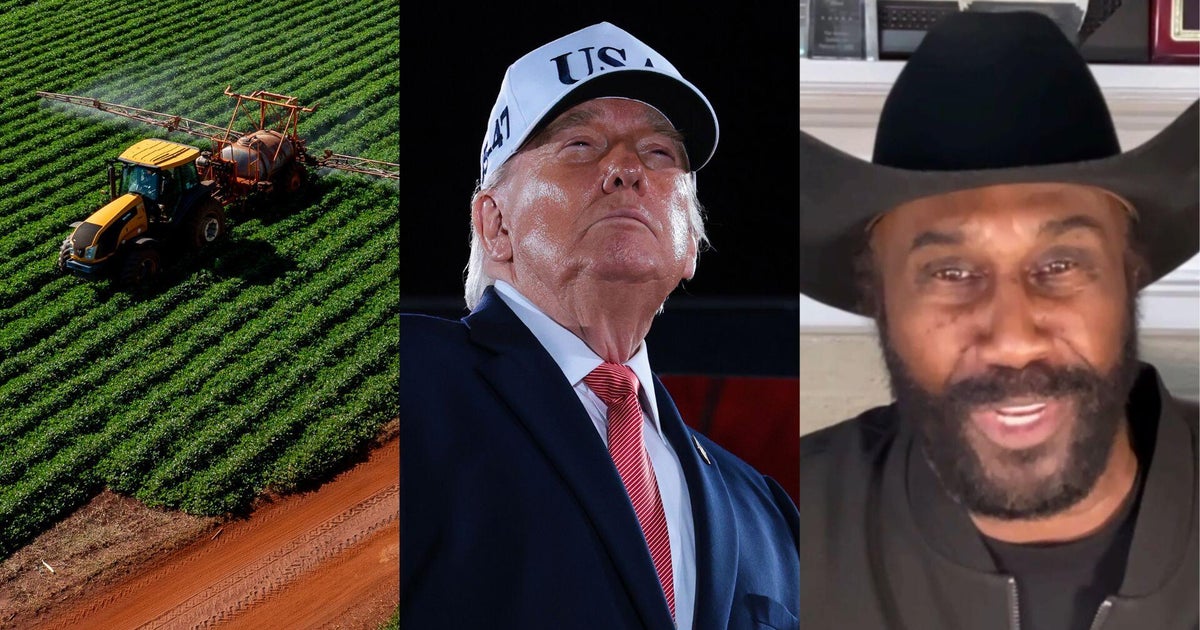
President Trump announced an $8 billion relief package for U.S. farmers reeling from record-high diesel prices, compounded by Iran war tensions and administration tariffs. The aid package aims to offset input cost inflation but falls short of addressing structural pressures on farm economics, according to farmer feedback.
Key points
Market impact. The relief package provides temporary cash flow support to agricultural producers but does not address underlying commodity price weakness or tariff-driven input cost inflation. Agricultural equipment manufacturers and fertilizer companies remain under pressure from reduced farmer purchasing power.
Broader implications. The aid signals political pressure on the Trump administration to support a key constituency, but it masks deeper structural challenges in U.S. agriculture from trade policy and geopolitical risk. Expect continued volatility in agricultural commodities tied to Iran tensions and tariff escalation.
Sources (3)CBS News, New York Post Business, Foreign Policy