Strong bearish −763 sourceswholesale · inflation · energy
U.S. wholesale inflation jumped 6.3% annually in September, the highest level since 2022, driven by soaring energy costs that caught forecasters off guard. The producer-price index rose 1.3% month-over-month, more than triple the 0.4% increase in August, marking the largest monthly advance in four years.
Key points
Market impact. This hotter-than-expected reading pressures the Federal Reserve to maintain elevated rates longer, supporting Treasury yields above 5% and weighing on rate-sensitive sectors including housing and consumer discretionary. Energy-dependent supply chains face margin compression heading into peak retail season, threatening retailer profitability.
Broader implications. Persistent wholesale inflation undermines the Fed's disinflation narrative and complicates the central bank's path to rate cuts in 2025. Consumers face the risk of delayed price increases filtering through retail channels despite moderating headline inflation.
Sources (3)New York Post Business, The Daily Caller, ABC News
The average 30-year fixed-rate mortgage held steady at 7.4%, its highest level in nearly three years, as elevated Treasury yields persist. Combined with stubbornly high home prices, affordability metrics have deteriorated sharply, pricing out millions of potential buyers from the market.
Key points
Market impact. Residential real estate transactions face sustained headwinds; mortgage originations remain depressed, pressuring lenders and real estate services. Home builders with inventory exposure face margin pressure if rates remain above 7% through 2027, as forecasters now predict.
Broader implications. Elevated mortgage rates act as a structural brake on household formation and consumer spending, offsetting some Fed rate-cut benefits. The housing market's weakness could amplify recession risks if employment deteriorates.
Sources (3)ABC News, New York Times Business, New York Times Economy
Taiwan Semiconductor Manufacturing Company reported third-quarter net profits of 763.34 billion New Taiwan dollars (approximately $1.4 trillion USD equivalent in cumulative earnings), marking its sixth straight record quarter. CEO signaled no sign of slowdown in AI-driven chip demand.
Key points
Market impact. TSMC's sustained profitability underscores the durability of AI infrastructure spending and validates semiconductor capital allocation. The stock remains a proxy for AI cycle health; sustained guidance supports semiconductor equipment makers and validates data center capex forecasts.
Broader implications. TSMC's performance contradicts concerns about AI spending rationalization and suggests the buildout cycle has further runway. Geopolitical risks around Taiwan remain a tail risk to global AI infrastructure continuity.
Sources (3)YouTube - Yahoo Finance, Market Watch, CNBC Top Stories
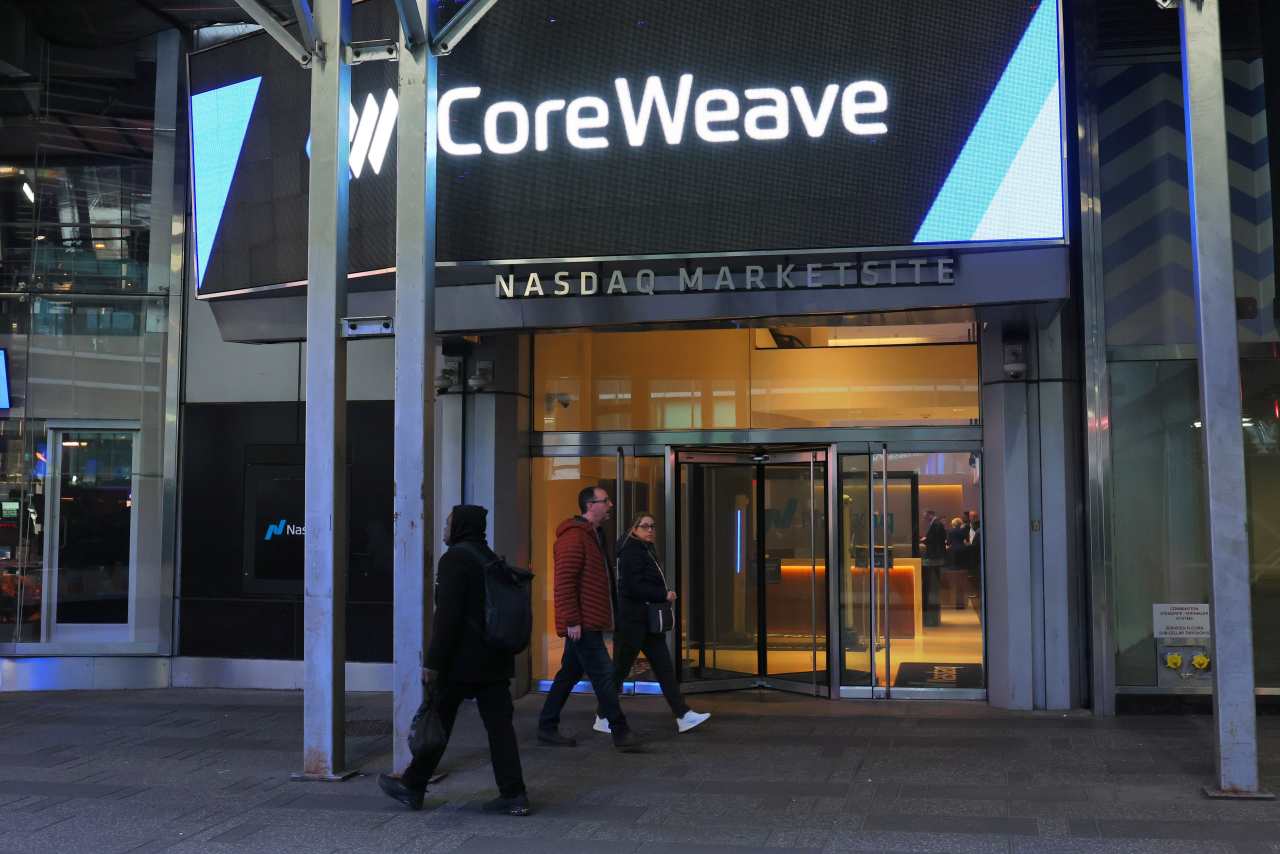
CoreWeave's bonds issued six months ago have fallen to 81 cents on the dollar, with yields blowing out to 15%, while the stock sank 15% as investors price in default risk. The AI infrastructure provider's debt deterioration signals growing skepticism about the sustainability of AI capex-fueled leverage.
Key points
Market impact. Rising default protection costs for AI infrastructure firms will tighten financing conditions for the sector, potentially constraining data center expansion and GPU procurement. Contagion risk extends to other leveraged AI plays and raises borrowing costs across the infrastructure stack.
Broader implications. CoreWeave's credit deterioration exposes the fragility of AI capex financing models dependent on sustained venture funding and revenue growth. A broader credit event in AI infrastructure could force recalibration of AI spending forecasts and semiconductor demand assumptions.
Strong bearish −723 sourcescharacter.ai · disney · bankruptcy
Interactive chatbot platform Character.AI declared bankruptcy just five years after launch, citing legal liabilities and business deterioration. Disney acquired select assets for $20 million, roughly one year after issuing a cease-and-desist order against the startup.
Key points
Market impact. Character.AI's collapse signals that consumer-facing AI applications face structural challenges in monetization and liability management. Disney's $20 million acquisition price reflects the depressed valuation of AI IP facing litigation risk, validating concerns about AI startup sustainability.
Broader implications. The bankruptcy underscores legal and regulatory headwinds for AI companies, particularly those targeting minors or generating user-generated content. Investor appetite for consumer AI startups will likely contract as liability exposure becomes clearer.
Sources (3)YouTube - Yahoo Finance, New York Post Business, CBS Money Watch
The 10-year Treasury yield surged past 5% to quarter-century highs after September core inflation came in hotter than expected, with Federal Reserve official Austan Goolsbee citing structural fiscal and inflation pressures. The $2 trillion federal deficit is forcing the Treasury to issue record debt at elevated rates.
Key points
Market impact. Higher Treasury yields raise borrowing costs across the economy, pressuring mortgage rates, corporate debt refinancing, and consumer credit. Equities face valuation compression as discount rates rise; sectors with long-duration cash flows (utilities, REITs, growth tech) face particular pressure.
Broader implications. Structural fiscal deficits combined with sticky inflation create a policy bind: the Fed cannot cut rates aggressively without reigniting price pressures, while the Treasury cannot reduce issuance without fiscal consolidation. Bank of America's survey suggests 6% is the capitulation yield for bond investors.
Sources (3)CNBC Economy, YouTube - Yahoo Finance, CNBC Top Stories
Samsara made its no-code Agent Studio platform generally available, reporting 7x adoption growth as customers deploy AI agents for physical operations tasks. The platform claims to boost fleet safety and efficiency by 30%, with early adoption concentrated in logistics and transportation.
Key points
Market impact. Samsara's traction validates the enterprise AI agent market and positions the company as a leader in operational AI. Competitors in fleet management and logistics software face pressure to accelerate AI integration or risk margin erosion as automation penetrates physical operations.
Broader implications. Enterprise AI agents are moving from pilot to production faster than expected, suggesting near-term productivity gains in capital-intensive industries. However, a parallel startup raised $21 million to address AI agent failures, signaling that reliability and governance remain unresolved challenges.
The Houthis are producing their own ballistic missiles using Chinese components, according to Wall Street Journal reporting, signaling independent weapons capability beyond Iranian control. Former U.S. envoy Tim Lenderking warned the group is emerging as a global threat with homegrown technical capacity.
Key points
Market impact. Escalating Houthi capabilities threaten Red Sea shipping lanes and raise geopolitical risk premiums on oil and maritime insurance. Energy markets face supply disruption risk if U.S. military escalation (including reported "mother of all bombs" contingency planning) destabilizes the region further.
Broader implications. Houthi autonomy from Iranian control complicates de-escalation calculus and raises the risk of uncontrolled regional conflict. Chinese component proliferation to non-state actors signals erosion of U.S. supply chain dominance and creates long-term geopolitical friction.
Netflix is replacing its content chief following a significant stock decline and viewership struggles, signaling management's acknowledgment that content strategy requires recalibration. The leadership change comes as the streamer faces intensifying competition and subscriber growth deceleration.
Key points
Market impact. Leadership turnover at Netflix raises questions about content ROI and production efficiency. Investors will scrutinize the new chief's strategy on content spend, original programming mix, and international expansion—metrics that directly impact margins and subscriber lifetime value.
Broader implications. Netflix's content challenges reflect broader streaming market saturation and the rising cost of content acquisition. The shift signals potential pivot toward lower-cost, higher-volume content or increased reliance on licensed IP—both of which compress differentiation.