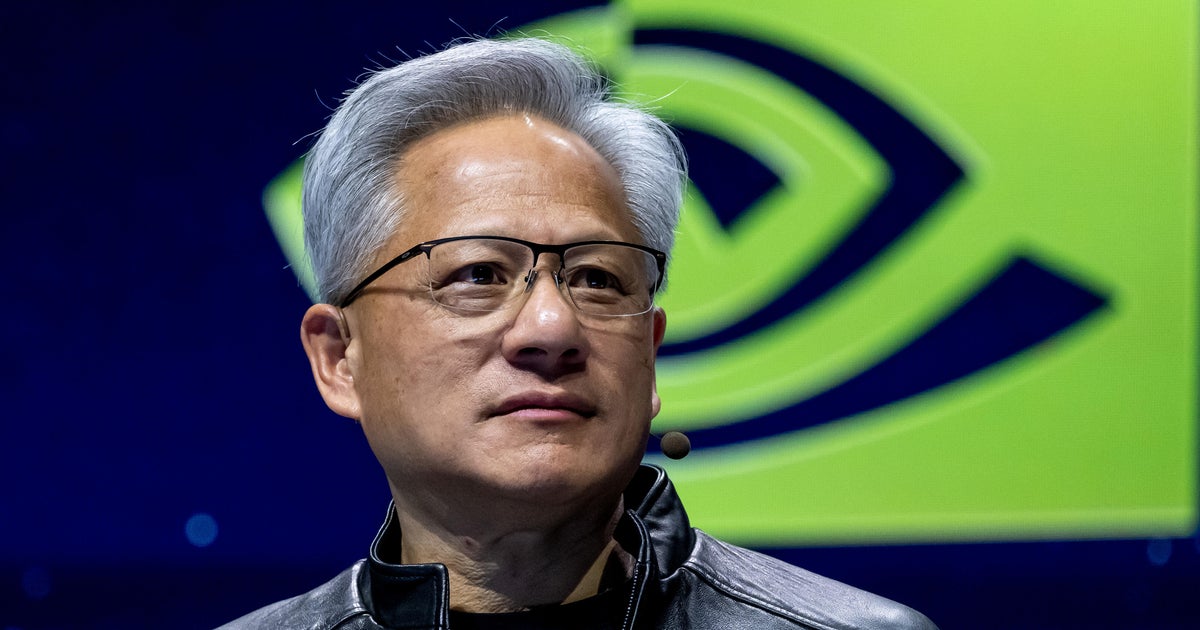
Nvidia's board met Wednesday evening to decide whether to remove CEO Jensen Huang after he admitted to a romantic relationship with a woman alleged by U.S. intelligence to be a Chinese spy. The decision could come as soon as Wednesday night, ending Huang's 33-year tenure as founder and CEO of the world's dominant AI chip manufacturer.
Key points
Market impact. Nvidia stock fell 6% on the news, erasing roughly $180 billion in market value. The uncertainty has rippled across semiconductor and AI infrastructure plays, though CoreWeave's strong earnings helped stabilize the broader AI trade. A leadership vacuum at Nvidia could destabilize the entire AI supply chain and investor confidence in the sector's governance.
Broader implications. House Republicans have demanded Huang appear for a closed-door hearing, and the FBI is investigating his ties to the alleged spy. The scandal exposes national security vulnerabilities in the U.S. AI infrastructure and raises questions about whether Nvidia's board knew of the relationship earlier. A CEO ouster of this magnitude would be unprecedented in tech and could trigger a broader reckoning over executive vetting in critical industries.
Sources (4)CBS Money Watch, The Guardian World News, CNBC Top Stories +1
Anthropic set its IPO price range at $70 to $78 per share, targeting a $1.404 trillion market capitalization—a significant markdown from earlier reported $2 trillion ambitions. All seven co-founders plan to sell identical share tranches, each cashing out roughly $250 million in the offering expected to launch next week.
Key points
Market impact. The valuation cut signals investor pushback on AI startup multiples amid broader tech volatility and the Nvidia scandal. A successful Anthropic IPO would still make it one of the largest tech debuts ever, but the repricing reflects reality-checking on AI economics and cash burn. The deal's reception will set tone for other AI unicorn IPOs and venture funding rounds.
Broader implications. Anthropic's pullback from $2 trillion signals that even frontier AI labs face valuation discipline now. The company remains pre-revenue at scale, making the IPO a bet on Claude's competitive moat against OpenAI and Google. Success hinges on proving AI models can generate sustainable unit economics—a question still unanswered across the sector.
Sources (3)Business Insider, TechCrunch, New York Post Business
October's consumer price index came in hotter than expected, prompting Federal Reserve Governor Austen Goolsbee to call the report "borderline disturbing." Goldman Sachs revised its Fed forecast to pencil in additional tightening, and multiple officials signaled the central bank may need to quicken the pace of rate increases as December approaches.
Key points
Market impact. The 10-year Treasury yield raced back to 5%, pressuring equities and extending losses in rate-sensitive sectors. The yen weakened to a one-month low against the dollar on Fed hike bets. Persistent inflation expectations are now the dominant macro headwind, overriding any relief from AI earnings beats or CoreWeave's stabilization.
Broader implications. The Fed's gradual hiking approach is being tested by three straight months of firm underlying inflation, forcing officials to weigh recession risk against price stability. A faster tightening cycle would pressure growth stocks and AI capex spending, potentially constraining the very infrastructure buildout that markets have priced into valuations.
Sources (3)CNBC Finance, New York Times Business, Market Watch
Average U.S. heating bills are projected to rise 7% this winter, with households relying on heating oil facing increases as steep as 70% due to supply disruptions from the Iran conflict. Nearly 5 million American households dependent on heating oil will absorb the brunt of the shock, particularly in New York and neighboring states.
Key points
Market impact. Energy prices, particularly heating oil futures, have spiked sharply, adding to consumer cost-of-living pressures and inflation expectations. The shock disproportionately hits lower-income households, potentially dampening consumer spending and adding political pressure on the incoming Trump administration to address energy costs before winter peaks.
Broader implications. The Iran conflict is now directly feeding into U.S. inflation and household budgets, complicating the Fed's inflation fight. Advocates are calling on Congress for relief measures, signaling this could become a political flashpoint as winter deepens and energy costs bite hardest.
Sources (3)New York Post Business, The Guardian US News, New York Times Business
Strong bullish +533 sourcescoreweave · ai · earnings
CoreWeave's strong earnings report and improved AI economics sparked a broad rally Wednesday, with the Nasdaq gaining over 1% as investors rotated back into semiconductor and infrastructure plays. CoreWeave's commitment to disciplined debt management and evidence of sustainable unit economics in AI data centers calmed Wall Street's worst fears about the sector's viability.
Key points
Market impact. Micron and other AI stocks surged on renewed confidence in chip demand and infrastructure spending. SoftBank shares jumped 11% as Asian tech rallied in sympathy. The CoreWeave bounce provided a circuit-breaker after two straight days of losses tied to the Nvidia CEO scandal, suggesting the AI capex thesis remains intact despite leadership chaos at the chip giant.
Broader implications. CoreWeave's earnings prove that AI infrastructure can generate real returns, not just hype. The rally signals investors are willing to look past Nvidia's governance crisis if other players can demonstrate disciplined execution and path to profitability in the data center buildout.
Sources (3)New York Post Business, CNBC Top Stories, Market Watch
Elon Musk announced Tesla will extend Cybertruck production through summer 2027 to clear a massive backlog, reversing earlier plans to wind down at the Texas factory by mid-2027. Musk also disclosed that Tesla will have to return a substantial portion of Cybertruck deposits because order demand "far exceeds" the company's production capacity.
Key points
Market impact. The extended production timeline signals strong demand but also reveals Tesla's manufacturing constraints and cash flow headwinds from deposit refunds. The admission undercuts Tesla's ability to use pre-orders as a financing tool and suggests margin pressure on Cybertruck as the company struggles to scale production efficiently.
Broader implications. Cybertruck remains a key growth lever for Tesla, but production bottlenecks and deposit refunds expose execution risks in the EV ramp. The extended timeline also signals Tesla's capital intensity and competitive pressure in the electric truck market, where legacy automakers are accelerating launches.
Sources (3)CBS Money Watch, Business Insider, YouTube - Yahoo Finance
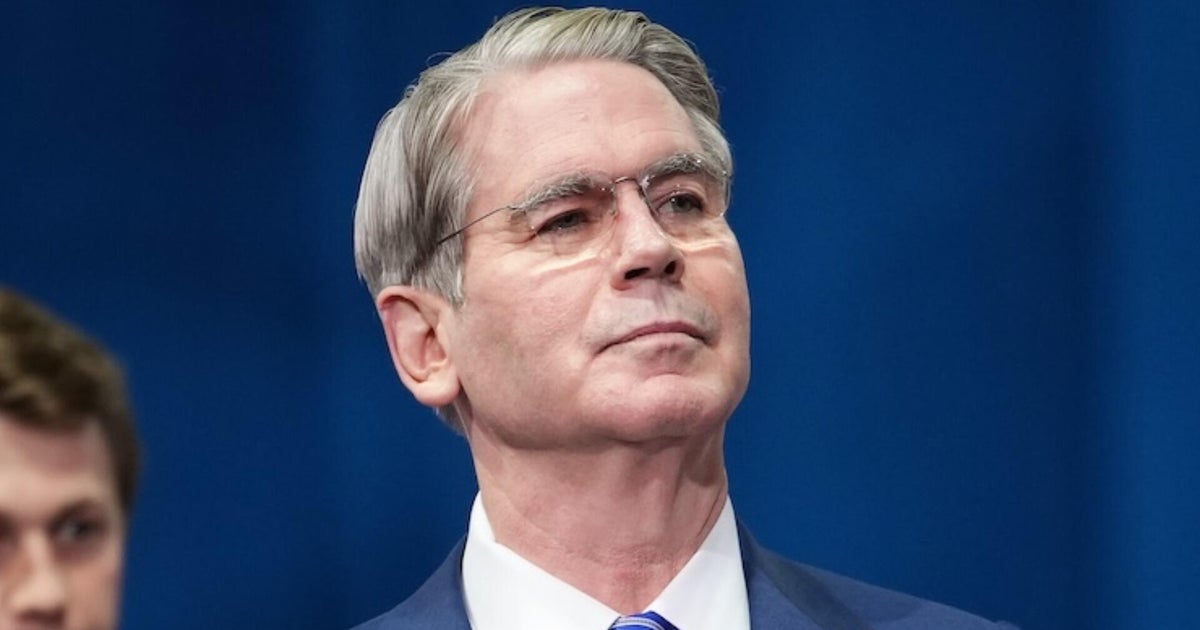
Treasury Secretary Scott Bessent has moved from his Washington, D.C. home to a military base following alleged Iranian threats against his life. Bessent joins multiple Trump administration officials now living on military installations due to heightened security concerns tied to U.S.-Iran tensions.
Key points
Market impact. The relocation underscores escalating geopolitical risk and potential disruption to Treasury operations. Any threat to the Treasury Secretary's safety or continuity of financial policy leadership could roil markets, particularly given ongoing inflation concerns and Fed policy uncertainty.
Broader implications. The Iran conflict is now directly threatening U.S. government leadership, raising the stakes for Middle East policy and energy markets. The security posture reflects genuine concern about Iranian retaliation capabilities and signals the Trump administration views the threat as credible enough to warrant extraordinary protective measures.
Neutral 03 sourcesrussian · ambassador · darchiev · us
Alexander Darchiev, Russia's ambassador to the United States, died suddenly Wednesday at age 66 after roughly 20 months leading the diplomatic mission. Putin had appointed Darchiev to spearhead a rapprochement with Washington, making him a key figure in U.S.-Russia relations during a period of heightened tensions.
Key points
Market impact. The death removes a central figure in U.S.-Russia diplomatic channels at a critical moment, potentially destabilizing negotiations and increasing geopolitical uncertainty. Energy and defense stocks may see volatility if markets interpret the loss as complicating diplomatic efforts or signaling deeper instability in Russian leadership.
Broader implications. Darchiev's sudden death creates a diplomatic vacuum and raises questions about continuity in U.S.-Russia talks. The timing—amid Ukraine conflict, Iran tensions, and Trump's incoming presidency—adds uncertainty to any potential negotiations or arms control discussions. Russia will need to appoint a successor, potentially delaying diplomatic progress.
Sources (3)Fox News World, The Daily Caller, Daily Wire