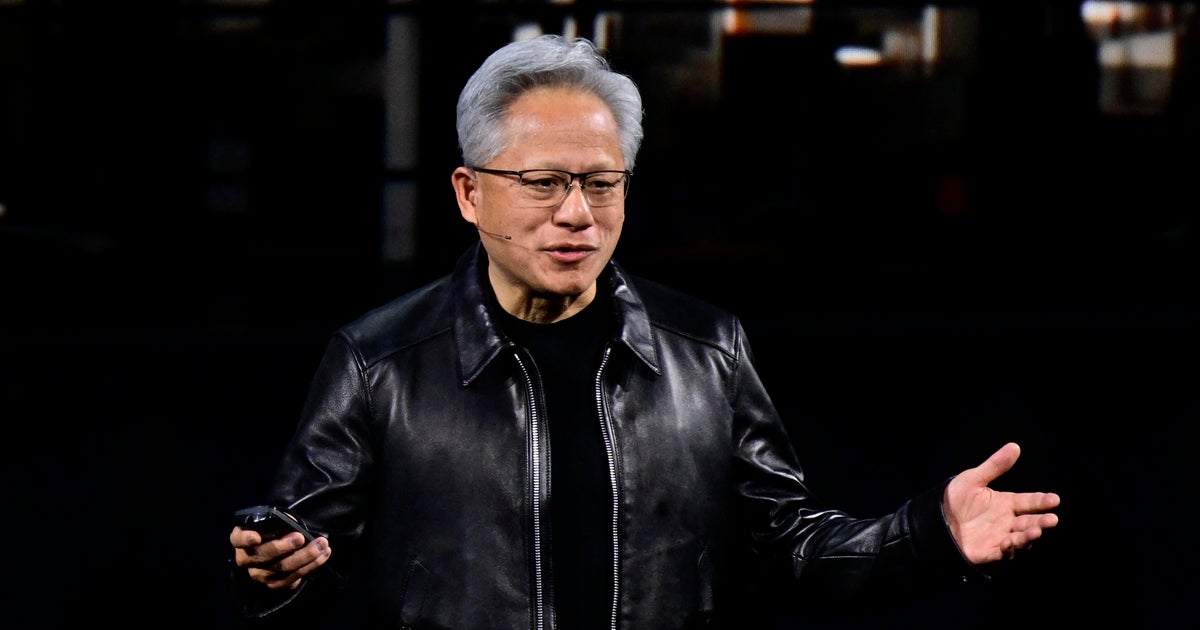
Nvidia CEO Jensen Huang resigned effective immediately following allegations of an extramarital affair with a woman believed by U.S. intelligence to be a Chinese spy. CFO Colette Kress assumes interim leadership as the board investigates the security breach and its implications for the chipmaker's classified work.
Key points
Market impact. Nvidia shares plunged 11% in opening trades Thursday, erasing roughly $500 million in market value over two trading days. The sudden leadership vacuum at the world's most valuable chipmaker—critical to AI infrastructure—triggered broad semiconductor weakness and raised questions about continuity in AI development and government contracts.
Broader implications. The scandal complicates U.S.-China relations ahead of a Trump-Xi summit and exposes vulnerabilities in how Silicon Valley handles national security. Congress has already demanded Huang testify, and the affair raises questions about counterintelligence protocols at defense-critical tech firms.
Sources (4)NPR Business, CBS News, New York Post Business
Strong bearish −584 sourcesmicrosoft · outlook · outage
A widespread outage struck Microsoft's cloud infrastructure Thursday, knocking Outlook, Teams, and other enterprise applications offline for approximately 130,000 users globally. The company attributed the disruption to unexpected server unavailability that strained remaining infrastructure, with recovery efforts underway.
Key points
Market impact. The outage disrupted business operations across financial services, healthcare, and corporate sectors that depend on Microsoft's email and collaboration tools. While Microsoft's stock has not yet reflected material damage, extended downtime poses reputational risk and raises questions about cloud infrastructure resilience during peak demand periods.
Broader implications. The incident underscores concentration risk in cloud computing, where a single vendor failure cascades across the global economy. It also highlights the operational fragility underlying the AI boom, where data center capacity is stretched thin.
Sources (4)NPR Business, The Guardian World News, New York Times Business +1
Strong bearish −724 sourceshousing · home sales · mortgage rates
Existing home sales fell 8.8% year-over-year in October to 3.75 million units—the lowest level since the late-2000s financial crisis. Mortgage rates hovered near 7%, pricing out middle-income buyers and leaving the housing market in its worst slump since the Great Recession's aftermath.
Key points
Market impact. The housing collapse signals weakening consumer balance sheets and reduced wealth-building capacity for households. Real estate-linked equities, mortgage REITs, and homebuilder stocks face headwinds, while the slowdown may eventually force the Fed to reconsider rate policy if economic data deteriorates further.
Broader implications. A stalled housing market historically precedes broader economic slowdown. Combined with elevated mortgage rates, the data suggests consumer purchasing power is eroding faster than headline inflation figures suggest, threatening the resilience of the consumer-driven U.S. economy.
Sources (4)NPR Business, The Washington Post, The Guardian Business +1
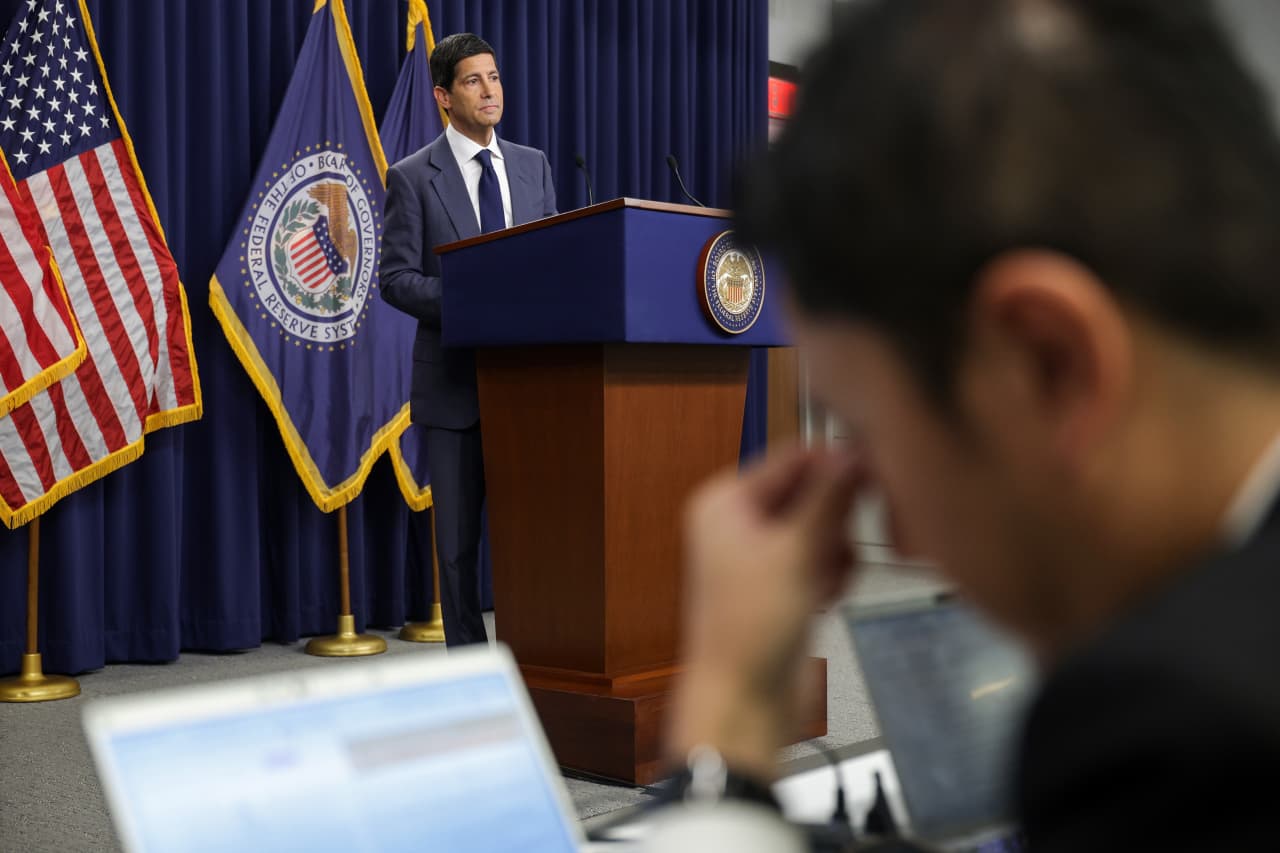
The 10-year Treasury yield raced back to 5% following a hotter-than-expected inflation report, marking the biggest bond yield surge since 2022. Fed Chair Kevin Warsh's communication style has amplified market volatility as investors struggle to parse the central bank's true policy trajectory.
Key points
Market impact. Rising yields pressure equities, particularly growth and unprofitable tech stocks that depend on low discount rates. Higher borrowing costs also ripple through mortgage markets, corporate debt, and consumer credit, exacerbating the housing affordability crisis and slowing business investment.
Broader implications. The yield surge reflects market skepticism that inflation has been tamed, contradicting the Fed's recent dovish messaging. If rate hike expectations persist, the central bank faces a credibility test and potential policy reversal that could destabilize markets further.
Strong bearish −402 sourcesunited airlines · ai agents · cybersecurity
United Airlines prohibited customers from using AI agents to book flights and manage reservations, citing cybersecurity vulnerabilities and potential violations of federal aviation rules. The move signals growing corporate caution around autonomous AI systems accessing sensitive customer and operational data.
Key points
Market impact. The ban constrains near-term revenue opportunities for AI agent developers and raises questions about enterprise adoption timelines. Travel and hospitality stocks may face margin pressure if AI automation rollouts stall, while cybersecurity vendors could see increased demand for AI governance tools.
Broader implications. The United decision reflects a broader industry reckoning: AI agents are not yet trustworthy enough for high-stakes transactions involving payment, identity, and customer data. Regulatory and liability concerns will likely slow AI deployment across financial services and travel sectors.
Neutral 02 sourcesspacex · data centers · ai infrastructure
Elon Musk's SpaceX announced a $74 billion investment to construct massive data centers in Texas and Arizona, signaling the company's pivot toward AI infrastructure as a core business. The buildout reflects acute scarcity of compute capacity and Musk's bet that vertically integrated AI infrastructure will be as valuable as rocket launches.
Key points
Market impact. The announcement underscores the capital intensity of AI infrastructure and validates the thesis that data center operators and chip suppliers will capture outsized value. Existing data center REITs and semiconductor firms benefit from the supply-demand imbalance, though SpaceX's entry could eventually commoditize the market.
Broader implications. Data center expansion faces mounting local opposition and permitting delays, creating a bottleneck for AI scaling. SpaceX's massive capital commitment suggests the company views AI compute as strategically critical—a bet that could reshape the competitive landscape if execution succeeds.
Neutral 03 sourcesscout motors · ev manufacturing · south carolina
Scout Motors commenced validation builds at its 16,000-acre South Carolina manufacturing facility, which can produce up to 200,000 vehicles annually—one every 88 seconds at full capacity. The company has accumulated 212,000 reservations for its Terra pickup and Traveler SUV, signaling strong demand for affordable electric trucks.
Key points
Market impact. Scout's production ramp adds competitive pressure to Tesla's Cybertruck and legacy automakers' EV lineups. The company's ability to execute at scale will determine whether it captures meaningful market share in the high-margin truck segment, with implications for Tesla's pricing power and Ford and GM's EV profitability.
Broader implications. Scout's entry validates the market opportunity in affordable EVs and demonstrates that capital-intensive manufacturing can still succeed in the U.S. if focused on underserved segments. The company's success or failure will shape investor appetite for new EV entrants and manufacturing consolidation trends.
CoreWeave's commitment to disciplined debt management and improved AI chip economics triggered a broad rally in semiconductor stocks, with Micron and other AI-exposed names surging. The data center operator's willingness to show fiscal restraint eased Wall Street's concerns about unsustainable capex cycles and margin compression in the AI infrastructure buildout.
Key points
Market impact. The rally lifted Asian tech stocks and semiconductor indices, reversing earlier losses tied to inflation data and Fed rate hike expectations. Chip suppliers and data center operators benefit from renewed confidence that AI infrastructure investments will generate positive returns, supporting valuations for Nvidia, AMD, and infrastructure-focused equities.
Broader implications. CoreWeave's messaging suggests the AI infrastructure market is maturing beyond pure capex euphoria toward disciplined unit economics. This shift could stabilize semiconductor valuations and reduce the risk of a capex-driven bubble, though it also implies slower growth rates than the market has priced in.
Nvidia's board named CFO Colette Kress as interim CEO to steer the chipmaker through its first leadership transition in 33 years. Kress, who has managed Nvidia's finances through the AI boom, assumes control as the company navigates a security investigation and questions about operational continuity.
Key points
Market impact. Kress's appointment provides some stability, as her deep knowledge of Nvidia's financials and operations reduces execution risk during the interim period. However, the market remains uncertain about permanent succession plans and whether Kress will be promoted permanently or if the board will recruit an external candidate, creating lingering uncertainty for the stock.