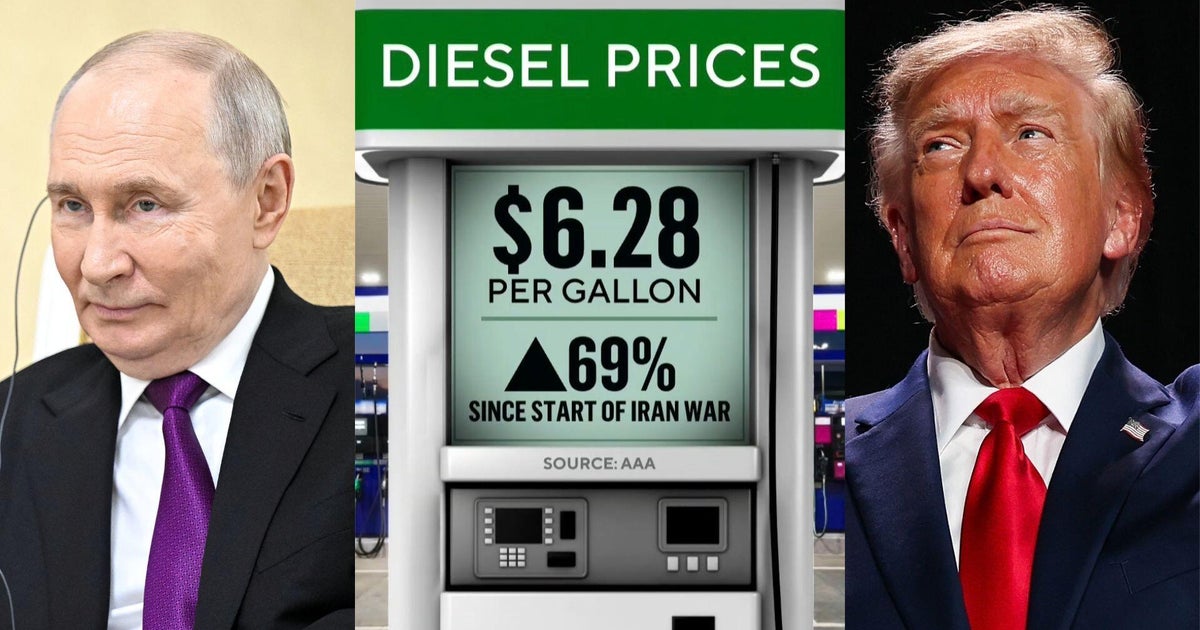
President Trump announced a deal with Russia to release millions of tons of diesel fuel to the U.S. market over coming months, framing it as essential to lower domestic fuel prices ahead of midterms. Zelenskyy responded with fury, warning the arrangement effectively bankrolls Moscow's war machine while Russian strikes killed 11 in Ukraine the day after the announcement.
Key points
Market impact. Diesel futures and energy complex volatility spike on geopolitical risk premium; the deal's actual volume is marginal relative to U.S. demand, limiting immediate price relief. Broader energy markets now price in sustained tension between U.S.-Russia alignment and NATO cohesion.
Broader implications. This signals a fundamental realignment of U.S. foreign policy toward Russia at Ukraine's expense, fracturing Western unity and raising questions about sanctions architecture and energy security strategy. The move trades short-term domestic political optics for long-term geopolitical credibility.
Sources (5)CBS Money Watch, CBS News, The Guardian US News +2
SpaceX agreed to acquire Grain Management's 800 MHz nationwide spectrum portfolio, a critical move to accelerate Starlink Mobile's U.S. deployment. The deal immediately pressured shares of AT&T, Verizon, and T-Mobile as Wall Street reassesses competitive risk from satellite-based wireless.
Key points
Market impact. AT&T, Verizon, and T-Mobile all declined on the news; the market is pricing in long-term margin compression and subscriber churn risk as Starlink Mobile scales. Spectrum scarcity and capital intensity have historically protected incumbent carriers—SpaceX's vertical integration and satellite backbone threaten that moat.
Broader implications. This represents a structural challenge to the U.S. telecom oligopoly. Starlink's low-latency satellite network plus terrestrial spectrum creates a hybrid competitor with pricing power and geographic reach incumbents cannot match, forcing industry consolidation and capex reallocation.
The average 30-year fixed-rate mortgage rose above 7.4%, reaching its highest level in nearly three years after seven consecutive weeks of increases. Demand for both refinancing and new home purchases has collapsed, with Wall Street increasingly favoring rental positions over homeownership.
Key points
Market impact. Homebuilder stocks face sustained headwinds; mortgage servicers and REITs benefit from higher rates and rental demand. Housing affordability indices have deteriorated sharply, pressuring consumer discretionary spending and wealth accumulation for non-asset holders.
Broader implications. Elevated rates are reshaping wealth inequality and household formation patterns. Generational homeownership rates decline while institutional capital consolidates rental supply, creating a structural shift toward a landlord-tenant economy and reducing middle-class wealth-building pathways.
OpenAI defended its termination of three safety researchers, characterizing their dismissal as a response to "breach of trust" rather than retaliation for raising AI safety concerns. The fired researchers countered with an open letter disputing misconduct allegations and warning of a chilling effect on internal safety advocacy.
Key points
Market impact. Reputational risk for OpenAI intensifies amid investor scrutiny of governance and safety culture; potential regulatory pressure on AI safety standards and disclosure. Talent flight from safety teams could accelerate as researchers fear career consequences for speaking up.
Broader implications. This signals a corporate prioritization of speed-to-market over safety rigor, setting a dangerous precedent for the AI industry. Regulatory bodies and institutional investors will likely demand stronger safety governance frameworks and whistleblower protections across the sector.
Sources (3)New York Post Business, CBS Money Watch, TechCrunch
Strong bearish −515 sourcestrump · fed · lisa cook
Trump established a White House committee to investigate unsubstantiated mortgage fraud allegations against Federal Reserve Governor Lisa Cook, renewing removal efforts despite a Supreme Court ruling that her prior firing was unconstitutional. Cook's legal team argues there is no basis for removal and she has not been charged with any crime.
Key points
Market impact. Fed independence concerns resurface; markets price in heightened political risk to monetary policy credibility. Uncertainty around Cook's tenure and potential policy shifts creates volatility in rate expectations and bond yields.
Broader implications. This represents an assault on institutional independence and due process. If successful, it establishes precedent for politicizing the Federal Reserve and undermines the central bank's insulation from executive pressure—a structural threat to macroeconomic stability and inflation credibility.
Sources (5)Market Watch, Washington Post Politics, The Guardian Business +2
Starbucks has engaged advisers to explore a takeover of Chipotle, combining two of America's most recognizable restaurant brands. Chipotle shares jumped on the report, but analysts immediately flagged concerns over Starbucks' debt capacity and the cultural mismatch between premium coffee and fast-casual Mexican food.
Key points
Market impact. Chipotle (CMG) rallied on M&A premium; Starbucks (SBUX) faces pressure as investors worry about leverage and capital allocation. A deal would require significant debt issuance at elevated rates, compressing returns and delaying shareholder returns.
Broader implications. This signals consolidation pressure in QSR as growth slows and unit economics compress. However, brand integration risk and operational complexity make this a high-stakes bet; failure would destroy shareholder value and distract management from core turnaround efforts at Starbucks.
Oil prices jumped 5% on Iranian attacks disrupting tanker traffic through the Strait of Hormuz, pushing Treasury yields higher as markets price in persistent inflation and hawkish Federal Reserve positioning. Ray Dalio warned that the earnings cushion protecting stocks from rising yields is shrinking.
Key points
Market impact. Equity valuations compress as discount rates rise; growth stocks and high-multiple tech face particular pressure. Energy rallies but broader market faces headwinds from stagflationary dynamics—rising rates and oil prices simultaneously eroding both growth and margin expectations.
Broader implications. Geopolitical supply shocks combined with tight monetary policy create a toxic mix for risk assets. If yields breach 6% and oil remains elevated, equity risk premiums will reset sharply lower, potentially triggering a correction in overvalued segments.
Sources (3)New York Post Business, YouTube - Yahoo Finance, CNBC Top Stories
The Trump administration imposed fresh sanctions on the International Criminal Court, vowing to dismantle it "brick by brick" unless it ceases investigations targeting Americans. The move drew criticism from Nobel Peace Prize laureate Navi Pillay, who called the sanctions "unheard of" and unacceptable.
Key points
Market impact. Geopolitical risk premium widens; emerging market currencies and bonds face pressure as U.S. unilateralism undermines multilateral institutions. Defense and security contractors may benefit from increased international tensions and reduced legal accountability frameworks.
Broader implications. This represents a direct assault on international law and accountability mechanisms. By weaponizing sanctions against the ICC, the U.S. signals willingness to operate outside rules-based order, emboldening other powers to do the same and destabilizing the post-WWII legal architecture.
Strong bearish −711 sourcejpmorggan · fixed income · credit
JPMorgan portfolio manager Priya Misra made a bullish call on fixed income, characterizing current conditions as a "once in a generation opportunity" to take credit risk in high-quality corporates. The call comes as the MOVE Index—Treasury market's volatility gauge—reached levels historically associated with yield peaks.
Key points
Market impact. Investment-grade credit spreads tighten as institutional capital rotates into bonds; high-yield faces selective demand. The call signals that major asset managers believe yields have peaked or are near peaks, potentially marking an inflection point for fixed income positioning.
Broader implications. If JPMorgan's thesis proves correct, this marks a transition from equity-centric to income-centric markets. However, if inflation re-accelerates or geopolitical shocks persist, credit spreads could widen sharply, punishing early movers into risk.