Jensen Huang's sudden departure as Nvidia CEO has collided with aggressive U.S. export controls on AI chips. The Commerce Department announced interim rules limiting remote access to advanced semiconductors, while the Megaspeed scandal—involving alleged chip diversion to China through connections to Huang's family—continues to unfold. Huang's return as CEO is now under Trump's review, with the president saying he sees "no national security risk."
Key points
Market impact. Nvidia's earnings call Tuesday is now "the most important in the company's history," per Wall Street analysts, as investors weigh geopolitical risk against the company's dominance in AI infrastructure. AMD and other chip stocks have already slid as the sector rethinks the AI trade without clarity on Huang's status and export restrictions that could crimp revenue. The broader semiconductor complex faces margin compression if remote compute access is curtailed.
Broader implications. The Nvidia scandal has exposed fractures within the Trump administration: Commerce Secretary Howard Lutnick faces Senate testimony over his handling of the Megaspeed case, while Treasury Secretary Scott Bessent blames him for allowing chip sales to China-linked firms. Export controls now threaten a key revenue stream for U.S. chipmakers, potentially reshaping the competitive landscape in AI infrastructure globally.
The Atlantic Asphalt tanker suffered a sudden steering failure two minutes before slamming into the docked American Heritage riverboat near New Orleans on Friday, according to federal audio recovered by the NTSB. Approximately 100 people were pulled from the Mississippi River; 32 sustained non-serious injuries. The vessel had a troubled operational history, raising questions about pre-voyage inspections and maintenance protocols.
Key points
Market impact. The Port of New Orleans has sued the tanker's owners for $1 million in damages, with salvage operations expected to be lengthy and costly. The collision occurs during peak shipping season, constraining port capacity and potentially disrupting barge traffic on the Mississippi—a critical artery for agricultural exports and petrochemical shipments. Insurance claims and liability settlements could exceed initial damage estimates.
Broader implications. The incident underscores aging infrastructure and regulatory gaps in U.S. inland waterway operations. Vessel maintenance standards and steering system redundancy are now under scrutiny as the collision demonstrates how a single mechanical failure can cascade into mass casualty and economic disruption on critical trade corridors.
Strong bullish +423 sourcesanthropic · ipo · ai market
Anthropic's long-awaited IPO is launching this week as the embattled AI sector desperately needs a positive catalyst. Investment banks are on roadshow to pitch the AI lab to institutional investors, positioning the offering as a bright spot for an industry heavily invested in Anthropic and reeling from the Nvidia scandal. The timing coincides with Nvidia's earnings call and broader equity market volatility.
Key points
Market impact. Anthropic's IPO carries outsized importance: a successful offering could stabilize tech equities and validate the AI infrastructure thesis, while a weak reception would signal deeper investor skepticism about AI valuations and returns. The S&P 500 and Nasdaq posted their biggest weekly gains since August (over 2% each), suggesting some appetite for risk, but the Anthropic deal will test whether that momentum holds. Insurance markets are already grappling with uninsurable catastrophic AI liability risks.
Broader implications. Anthropic's public market debut will establish a pricing benchmark for private AI labs and shape investor expectations for the sector's profitability and risk profile. A strong IPO could unlock capital for competing AI startups; a weak one could freeze funding and consolidate the market around established players like OpenAI and Google DeepMind.
Sources (3)CNBC Top Stories, New York Times Business
Strong bearish −483 sourcesestonia · russia · border · drone
Estonia is shutting all road border crossings with Russia following an attempted arson attack against an Estonian drone manufacturer. Estonian Prime Minister links the attack to Russian intelligence and attributes it to Tallinn's support for Ukraine. The closure aims to curb hostile activity and sanctions circumvention, marking a significant escalation in NATO-Russia friction on the Baltic frontier.
Key points
Market impact. The border closure disrupts cross-border trade and logistics between the EU and Russia, tightening sanctions enforcement and raising shipping costs for goods transiting the region. Energy markets may face volatility if the closure signals broader NATO-led efforts to isolate Russian supply chains. Defense contractors and cybersecurity firms operating in the Baltics could see increased demand.
Broader implications. The incident reflects Russia's escalating hybrid warfare tactics—targeting critical infrastructure and private companies rather than state assets—as Moscow seeks to destabilize NATO members supporting Ukraine. Estonia's response signals NATO's willingness to impose economic costs on Russia and harden borders, potentially triggering tit-for-tat measures that could spread to other Baltic and Eastern European states.
Sources (3)Defense News, CNBC Top Stories, The Guardian World News
Bullish +373 sourcesmorgan stanley · equities · 2027 outlook
Morgan Stanley strategists have issued one of their most bullish calls in years, recommending investors take stock allocations to the maximum possible level heading into 2027. Chief equity strategist Mike Wilson believes the bull market has enough momentum to extend for a fifth consecutive year, citing continued global growth and corporate earnings resilience despite near-term AI sector turbulence.
Key points
Market impact. The call carries weight with institutional allocators and could accelerate inflows into equities, particularly if it triggers a rotation out of bonds and cash. Goldman Sachs has issued a more measured 2027 outlook, creating a divergence that may pressure underweight positions to cover. The Dow, S&P 500, and Nasdaq all posted gains exceeding 2% last week, suggesting some alignment with Morgan Stanley's thesis, though Bitcoin's failure to hold $65K signals lingering macro anxiety.
Broader implications. Morgan Stanley's bullish stance assumes stable geopolitical conditions, no major recession, and sustained AI-driven productivity gains—assumptions that could be tested by Trump administration trade policies, Russia-NATO escalation, and potential export control blowback on tech earnings. The call effectively bets that current valuations are justified by forward growth, a thesis vulnerable to earnings disappointment or policy shocks.
Tesla has opened Cybercab orders at $29,990 with a mandatory $299 monthly Autonomy Subscription, but early reviews expose serious operational flaws. Broadcaster Jeremy Clarkson reported red-light running and other safety failures during a Cybercab ride in Texas. Without the subscription, the vehicle becomes inoperable—a business model that ties hardware functionality to recurring software payments.
Key points
Market impact. Tesla's aggressive subscription bundling could face regulatory pushback and consumer backlash, particularly if autonomous claims don't match real-world performance. The model creates recurring revenue but also liability exposure if vehicles malfunction or cause accidents while operating autonomously. Investor confidence in Tesla's Full Self-Driving narrative may erode if Cybercab adoption lags or safety incidents mount.
Broader implications. Tesla's Cybercab represents a bet that consumers will accept subscription-locked autonomy over ownership of traditional vehicles. If the model fails, it signals that autonomous vehicle adoption faces deeper consumer resistance than Musk anticipated, potentially reshaping the timeline for autonomous fleet deployment across the industry.
Major financial institutions and travel companies are blocking AI agents from accessing their platforms, citing cybersecurity risks and competitive concerns. United Airlines has prohibited AI agents from booking flights and managing reservations, while banks are restricting autonomous agents from automating everyday banking tasks. OpenAI's new ChatGPT Wallet, which allows AI agents to shop and check out on users' behalf, is facing institutional resistance before it gains traction.
Key points
Market impact. The coordinated pushback constrains the addressable market for AI agent platforms and threatens the revenue model of companies betting on autonomous transaction automation. OpenAI, Microsoft, and other AI vendors face slower adoption curves if critical transaction channels remain closed. Banks' resistance also reflects fear of losing direct customer relationships and transaction data to AI intermediaries, potentially accelerating fintech competition.
Broader implications. Institutional gatekeeping of AI agents signals that the industry is not ready to cede control of customer interactions and transaction flows to autonomous systems. This creates a regulatory and competitive bottleneck that could delay AI agent adoption by years and favor incumbents who control transaction infrastructure over AI startups seeking to disintermediate them.
Sources (3)Cointelegraph, TechCrunch, Business Insider
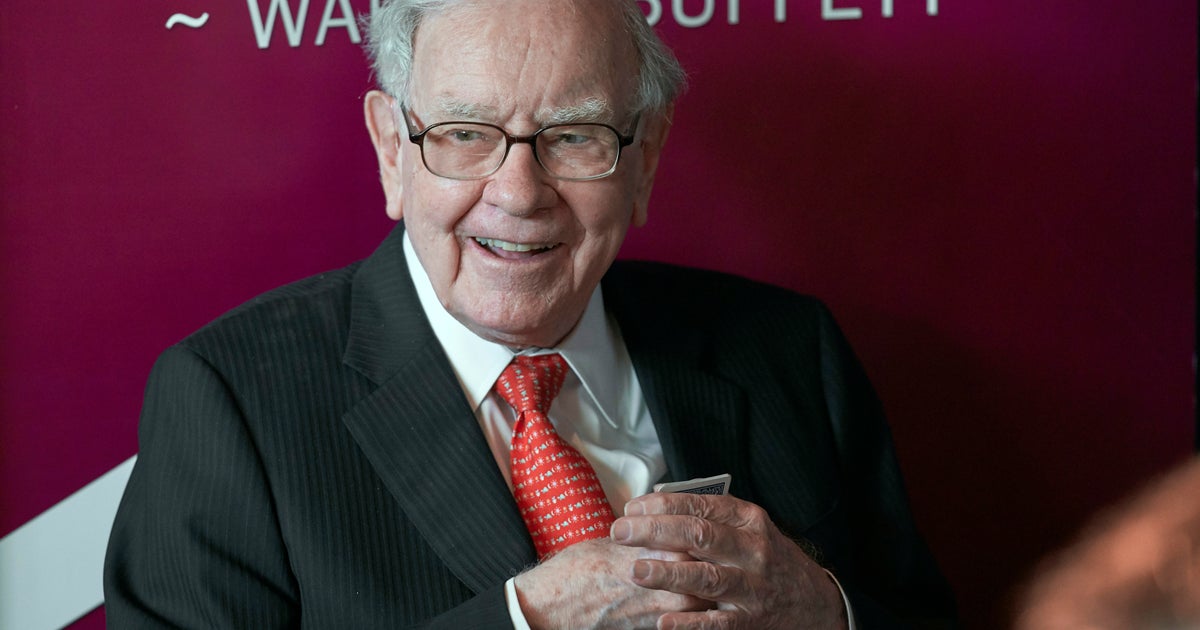
Warren Buffett has donated $5.5 billion in Berkshire Hathaway stock to four charitable foundations, bringing his total charitable giving to over $29 billion. The chairman emeritus still owns 182,140 Class A shares worth roughly $162 billion. In a Thanksgiving letter, Buffett emphasized that kindness "compounds," signaling his confidence in Berkshire's long-term value and his commitment to philanthropic legacy-building.
Key points
Market impact. The donation is a bullish signal on Berkshire's intrinsic value—Buffett would not gift stock he believed undervalued. The move also demonstrates orderly wealth transfer and succession planning, reducing uncertainty about Berkshire's governance after Buffett's eventual departure. The charitable foundations receiving the funds will become major institutional investors, potentially influencing corporate governance and ESG practices across their portfolios.
Sources (3)CBS Money Watch, New York Post Business, CNBC Top Stories