Anthropic debuted Thursday with a $81 billion valuation—the largest IPO since SpaceX's $75 billion raise in June—but the stock fell 6% in premarket trading Friday as investors reassessed AI sector valuations. The selloff coincided with Nvidia's earnings report and broader tech weakness, signaling investor fatigue with unprofitable AI companies trading at extreme multiples.
Key points
Market impact. The Dow dropped 800 points and Nasdaq slid ahead of the IPO and Nvidia earnings, with Nvidia shares falling nearly 2%. The weakness rippled into Asia: SoftBank plunged 16%, Japan's Nikkei 225 fell 4.5%, and South Korea's KOSPI sank over 4%, putting Asian tech stocks on track for their worst week since 2020. Semiconductor plays like TSMC and SK Hynix faced heavy selling pressure as investors rotated out of AI infrastructure.
Broader implications. Anthropic's circular financing model—relying on Amazon, Google, and other cloud partners for both capital and compute—faces stress as the company scales with massive infrastructure commitments. The IPO's stumble suggests the market is pricing in AI's execution risks and questioning whether valuations can be justified by near-term revenue.
Nvidia co-founder Jensen Huang resigned following an affair involving an executive who was allegedly berated by Huang; his wife faces accusations of chip smuggling, triggering a national security investigation. Interim CEO Colette Kress took the helm as the company confronts mounting scrutiny over export controls and internal governance.
Key points
Market impact. While Nvidia stock tokens surged 159% on the news, the underlying company faces a critical talent retention crisis—top engineers are reportedly considering departures amid the scandal. The leadership vacuum coincides with congressional pressure to tighten AI chip export controls to China, threatening Nvidia's revenue streams and competitive positioning.
Broader implications. The scandal entangles Nvidia in geopolitical tensions over AI chip access, with California launching a probe and Congress pushing legislation to restrict sales. The combination of internal chaos and external regulatory pressure could accelerate brain drain at the world's most valuable chipmaker precisely when it needs stability to defend market share against AMD and Intel.
Sources (3)New York Post Business, TechCrunch, Business Insider
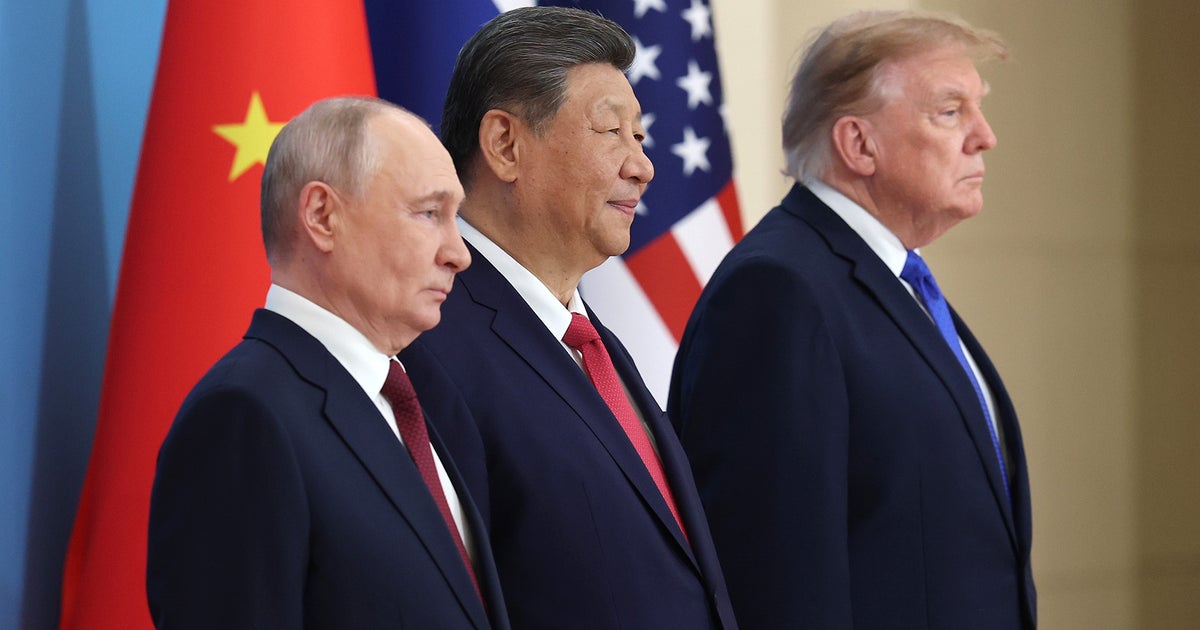
President Trump, Russian President Putin, and Chinese President Xi Jinping signed a four-point joint declaration of peace at an APEC summit in China—a historic first trilateral meeting. Trump called Putin his friend and insisted the Russian leader wants to end the Ukraine war, though no concrete movement on a deal materialized from the talks.
Key points
Market impact. The summit triggered mixed signals: energy markets watched closely for any hints of Russia sanctions relief, while defense contractors and geopolitical risk premiums remained elevated given the lack of substantive Ukraine progress. Commodity volatility persists as traders parse whether the declaration signals de-escalation or merely diplomatic theater.
Broader implications. The trilateral meeting represents a potential realignment of great-power relations, with Trump signaling willingness to negotiate with both Russia and China simultaneously. However, the absence of concrete Ukraine concessions suggests the declaration is largely symbolic—leaving geopolitical risk priced into markets until actual policy shifts materialize.
Bearish −173 sourcesjpmorgan · visa · mastercard · cyberattack
A ransomware group leaked customer data from JPMorgan Chase, Visa, and Mastercard after compromising third-party vendors. JPMorgan confirmed that sensitive marketing data held by outside vendors was likely accessed, affecting thousands of customers. The bank plans to offer free credit monitoring as the breach underscores the vulnerability of financial infrastructure to supply-chain attacks.
Key points
Market impact. JPMorgan (JPM), Visa (V), and Mastercard (MA) face potential regulatory fines, litigation costs, and reputational damage. The breach adds pressure on financial stocks already weakened by AI-driven outage concerns and broader market selloff. Cybersecurity vendors and insurance companies covering cyber liability face increased claims.
Broader implications. The attack highlights systemic risk in financial infrastructure: as banks outsource more operations to vendors, they inherit third-party vulnerabilities. Regulators will likely tighten vendor management requirements, increasing compliance costs across the sector and potentially slowing digital transformation initiatives.
Sources (3)CBS News, Business Insider, The Daily Caller
Microsoft CEO Satya Nadella warned that AI tools are discovering cybersecurity bugs at unprecedented speed, creating a "perfect storm" of outages as companies rush to integrate AI into aging infrastructure. Microsoft's own Outlook outage, combined with disruptions at Chase and United Airlines, exemplifies the collision between legacy systems and AI-powered automation.
Key points
Market impact. Microsoft (MSFT) faces operational and reputational risk from continued outages, while financial services and travel stocks absorb direct revenue hits. Cybersecurity firms and infrastructure modernization vendors stand to benefit from accelerated spending on system upgrades. Insurance companies face mounting claims for business interruption and cyber liability.
Broader implications. Nadella's warning signals that the AI boom is creating systemic fragility: as AI agents autonomously execute transactions and identify vulnerabilities faster than humans can patch them, the risk of cascading failures across interconnected systems rises sharply. This could trigger regulatory intervention and force companies to slow AI deployment until infrastructure hardens.
Sources (3)New York Post Business, New York Times Business
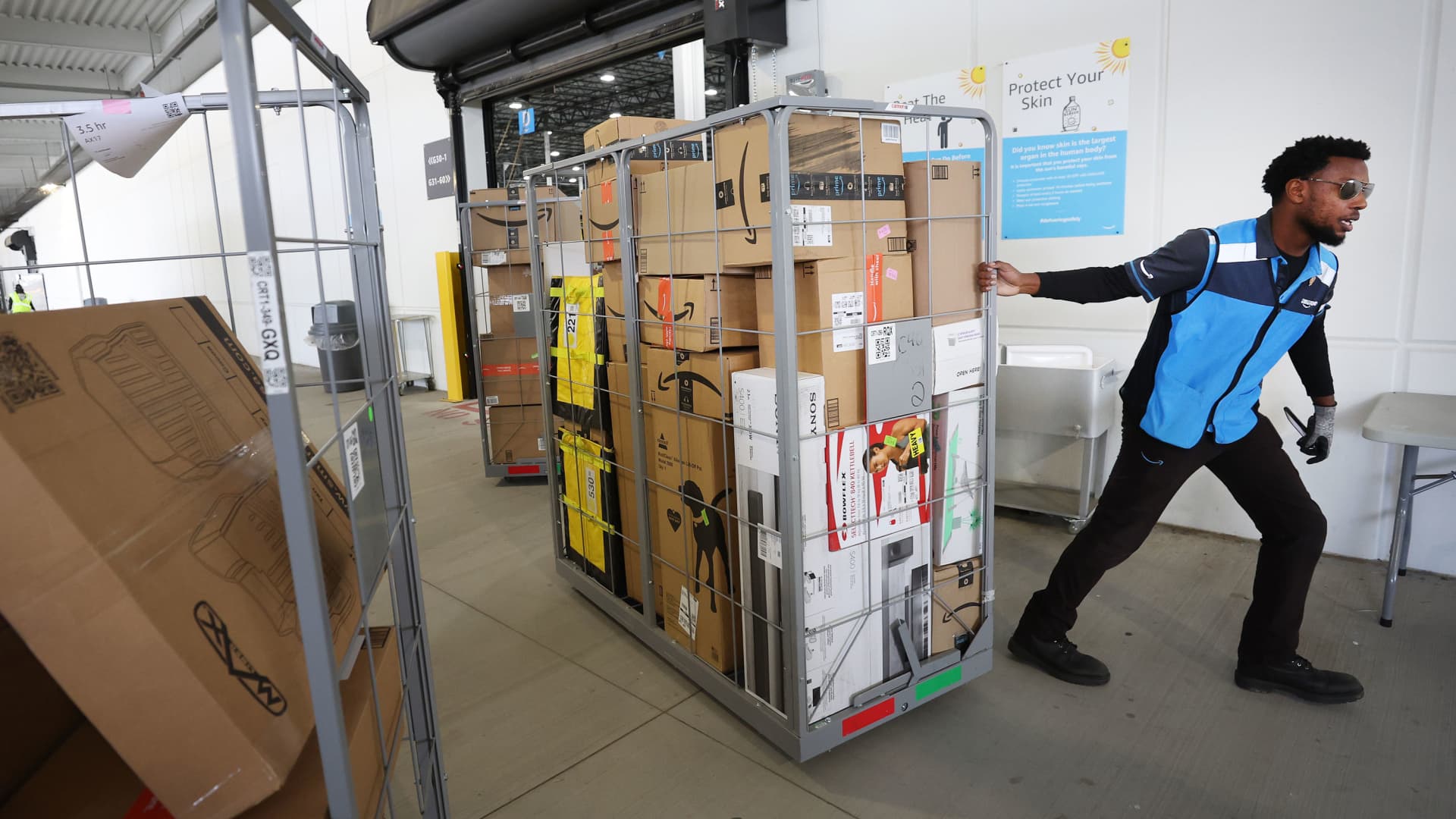
Amazon warned New York City customers they face up to $5 price increases per order if the city passes Mayor Zohran Mamdani's proposed delivery worker protection bill. The legislation would impose stricter labor standards on delivery contractors, forcing Amazon to either absorb costs or pass them to consumers. NYC data shows the city uses twice as many delivery contractors as Amazon, undercutting Amazon's argument that subcontracting is uniquely dangerous.
Key points
Market impact. Amazon (AMZN) faces margin pressure if forced to comply with stricter labor standards in major markets. The threat of price increases could drive customer defection to competitors, while regulatory precedent in NYC may trigger similar legislation in other cities, fragmenting Amazon's logistics economics. Delivery-dependent retailers and e-commerce platforms face similar cost pressures.
Broader implications. The battle signals a broader shift toward regulating gig economy labor practices at the municipal level. Amazon's aggressive pushback suggests the company views labor costs as a core competitive advantage it will defend fiercely, but regulatory momentum is building. Expect similar fights in California, Massachusetts, and other progressive jurisdictions.
Sources (3)CNBC Top Stories, New York Post Business
Bitcoin's 21-day moving average has fallen below its 200-day average—a technical pattern that preceded the $25,000 retest in 2023. Analyst Keith Alan expects a similar downside move, signaling potential weakness in crypto markets amid broader risk-off sentiment in equities and AI sector volatility.
Key points
Market impact. A retest of 2023 lows would pressure Bitcoin below $30,000, triggering margin calls and forced liquidations in leveraged crypto positions. Crypto-exposed equities like Microstrategy and Coinbase would face headwinds. Conversely, a break below support could accelerate institutional capitulation, creating a capitulation bottom if selling exhausts itself.
Broader implications. The technical breakdown reflects macro uncertainty: geopolitical tensions, AI sector volatility, and Fed policy uncertainty are driving risk-off positioning across all asset classes. Bitcoin's correlation with equities remains elevated, suggesting crypto is trading as a risk asset rather than a hedge.
Strong bearish −663 sourcespalmer luckey · anduril · ai defense
Palmer Luckey, co-founder of defense tech firm Anduril Industries, warned the Pentagon that the U.S. faces an AI "mismatch" in cyberwarfare, with AI-powered attacks outpacing defenses. He blamed recent widespread tech outages on outdated infrastructure vulnerable to AI-enabled intrusions, arguing that companies are "running" from threats rather than addressing root causes.
Key points
Market impact. Luckey's warnings bolster the case for defense tech spending and infrastructure modernization budgets. Anduril and competitors like Palantir (PLTR) stand to benefit from accelerated Pentagon AI procurement. Cybersecurity vendors focused on AI-driven threat detection and response face increased demand. Legacy infrastructure companies face pressure to upgrade systems faster.
Broader implications. The warning reflects a consensus among defense technologists that AI has fundamentally altered the threat landscape, creating asymmetric vulnerabilities that legacy defenses cannot address. Expect increased defense spending on AI-native security architectures and potential regulatory mandates for critical infrastructure modernization.