President Trump has threatened a "tremendous tax" on U.S. tech companies building data centers outside America, signaling a policy reversal that could upend the AI infrastructure race. The threat comes as Nvidia, OpenAI, and other AI leaders have accelerated overseas expansion to manage power constraints and geopolitical risk.
Key points
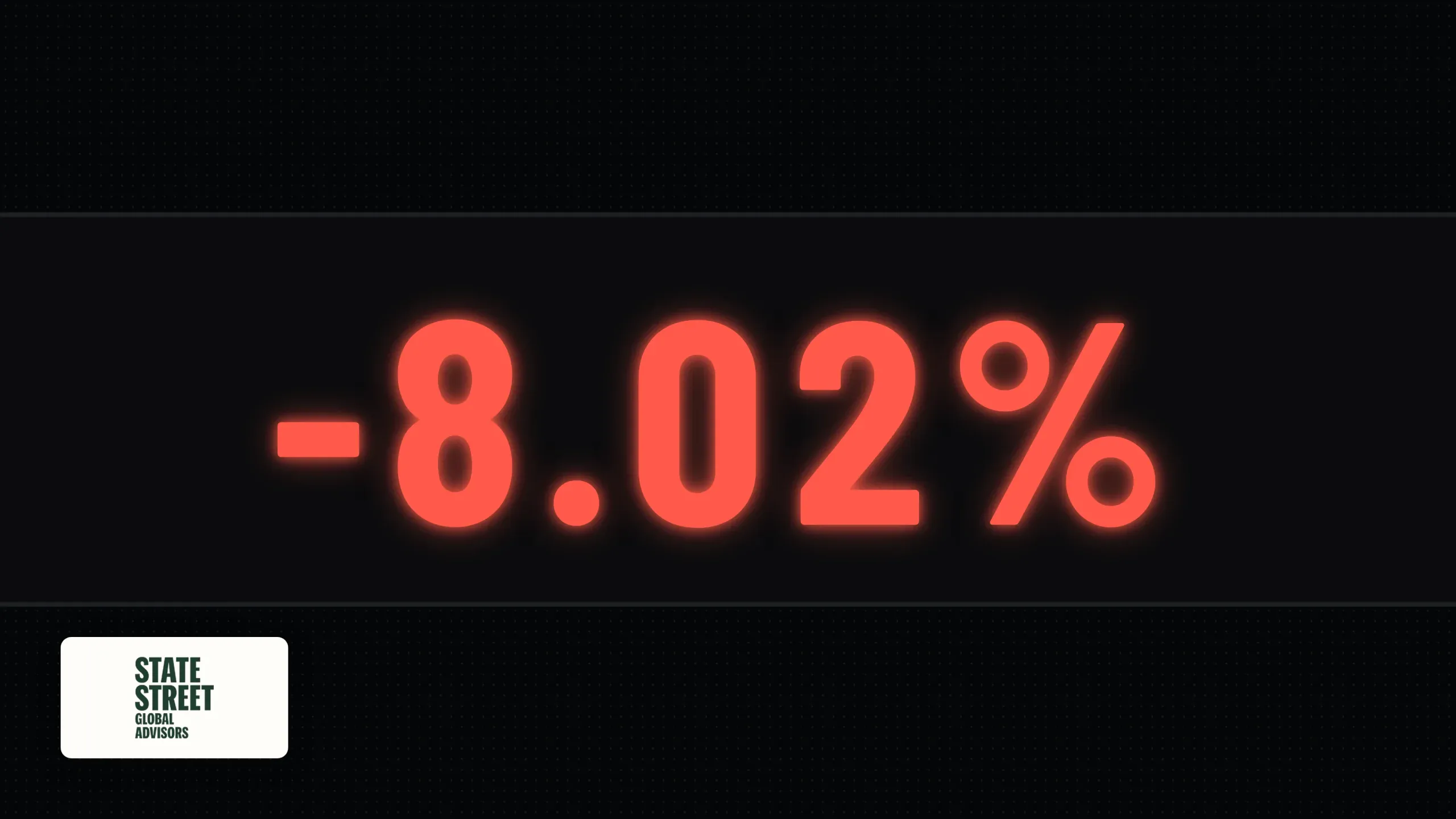
Market impact. This policy threat compounds the brutal tech selloff that saw Nasdaq erase all 2026 gains and the S&P 500 enter correction territory. Nvidia shares have suffered their longest weekly losing streak since 2020, and the threat of capital controls on data center investment could further pressure semiconductor and cloud infrastructure stocks.
Broader implications. Trump's move signals a nationalist pivot on AI infrastructure that could reshape global chip supply chains and slow the international expansion of U.S. tech dominance. The policy creates immediate uncertainty for companies like Nvidia, Meta, and Google that have committed billions to overseas capacity.
Sources (5)The Daily Caller, CBS News, Business Insider +2
The Nasdaq composite turned negative for the year as the S&P 500 and Dow Jones Industrial Average both entered correction territory, down 10% from records. All 11 S&P 500 sectors finished more than 1% lower this week—the first time this has occurred since April 2025—signaling a broad-based rout rather than sector-specific weakness.
Key points
Market impact. The S&P 500 sank 3.7% on Friday alone, with AI-heavy Nasdaq suffering its worst week since 2020. The Dow shed over 1,100 points in a single session, erasing nearly all of 2026 gains in five brutal sessions. Dividend-focused investors and retirees face renewed pressure as volatility spikes across all asset classes.
Broader implications. The synchronized decline across all sectors suggests investors are repricing risk appetite broadly, not just rotating out of AI. This marks a structural shift from the narrow mega-cap tech concentration that dominated 2025, potentially opening opportunities in undervalued value and dividend stocks.
Sources (4)CNBC Top Stories, Market Watch, NPR Business +1
Bearish −334 sourcesanthropic · ipo · ai valuation
Anthropic raised $81 billion in its Nasdaq debut Thursday, a record for an AI company, but shares slumped on the second day of trading as the broader market unraveled. The IPO's timing—one day before Nvidia's longest weekly losing streak since 2020—exposed a stark disconnect between Silicon Valley's valuation expectations and Wall Street's appetite for AI risk.
Key points
Market impact. Anthropic's IPO initially seemed a success but became a casualty of the AI sell-off, with shares diving as investors questioned the sustainability of massive capital deployments into unproven AI business models. The stumble signals that even blockbuster IPO valuations cannot insulate AI stocks from sector-wide repricing.
Broader implications. Anthropic's weak post-IPO performance suggests the market is reassessing the AI investment thesis after years of unchecked enthusiasm. This could constrain future AI funding rounds and force companies to prove revenue and profitability rather than rely on narrative-driven valuations.
Sources (4)CNBC Top Stories, New York Times Business, New York Post Business
President Trump said he "would love to see Jensen Huang given a second chance" at Nvidia, and claimed he discussed the ousted CEO with China's Xi Jinping—a statement that contradicted Treasury Secretary Bessent's account of recent U.S.-China talks. The Huang saga has shifted from personal scandal to geopolitical liability, with reports citing his "shady" China business dealings as the real catalyst for his exit.
Key points
Market impact. Trump's public backing of Huang adds political complexity to Nvidia's leadership crisis at a moment when the stock is already under severe pressure from the broader tech selloff. Any move to reinstate Huang could trigger regulatory scrutiny over China ties and complicate Nvidia's already fraught relationship with U.S. export controls.
Broader implications. The Huang affair reveals the collision between corporate governance and geopolitical risk in the AI era. U.S. tech leaders now face pressure from both Washington and Beijing, making it nearly impossible to navigate China exposure without triggering either national security concerns or political backlash.
Sources (4)New York Post Business, YouTube - Yahoo Finance, Washington Post Politics +1
Wall Street regulators are focusing on Nvidia's accounting practices, according to reports, adding a new layer of legal jeopardy to the chip giant already reeling from Jensen Huang's ouster and a historic stock decline. The SEC probe is the latest in a mounting list of legal challenges facing the company.
Key points
Market impact. An SEC accounting investigation could trigger additional selling pressure on Nvidia shares and raise questions about the reliability of the company's reported financials during its explosive growth phase. This compounds the reputational damage from Huang's departure and the geopolitical scrutiny over China ties.
Broader implications. The probe signals that regulators are tightening scrutiny on AI infrastructure companies that have benefited from years of unchecked growth and minimal oversight. Nvidia's troubles may foreshadow broader regulatory pressure on the entire semiconductor and AI sector.
Strong bearish −463 sourcesdow jones · dividend stocks · correction
The Dow Jones Industrial Average shed nearly all of its 2026 gains in five brutal sessions—a feat not seen since October 2008—with a single day drop exceeding 1,100 points. Retirees dependent on dividend income are now questioning whether their payouts remain durable as companies face margin pressure and economic uncertainty.
Key points
Market impact. The Dow's collapse has forced income-focused investors to reassess dividend stocks, with particular concern around whether high-yield payers can maintain distributions through a prolonged downturn. Dividend aristocrats and "Dividend Kings" with 50-plus years of consecutive raises are attracting defensive flows, but even these names face pressure if earnings deteriorate.
Broader implications. The Dow's historic decline signals that the market correction is not confined to growth and AI stocks but is spreading to traditional value and dividend-paying names. This threatens the retirement income strategies of millions of Americans who have shifted into dividend stocks as bond yields compressed.
Odds that the S&P 500 will cross 8,000 on prediction market platform Kalshi have plummeted from north of 70% to extremely low levels as the AI-driven rally unravels. The sharp repricing reflects a dramatic shift in market sentiment about the sustainability of 2025's gains.
Key points
Market impact. The collapse in 8,000 odds signals that sophisticated traders are now pricing in either a prolonged correction or a bear market scenario. This repricing could accelerate selling as momentum traders and trend-followers adjust positions in response to deteriorating technical signals.
Broader implications. Prediction markets are functioning as real-time sentiment gauges, and their dramatic shift suggests the market has moved from euphoria to fear in a matter of days. This kind of rapid repricing typically precedes either capitulation lows or extended downside.
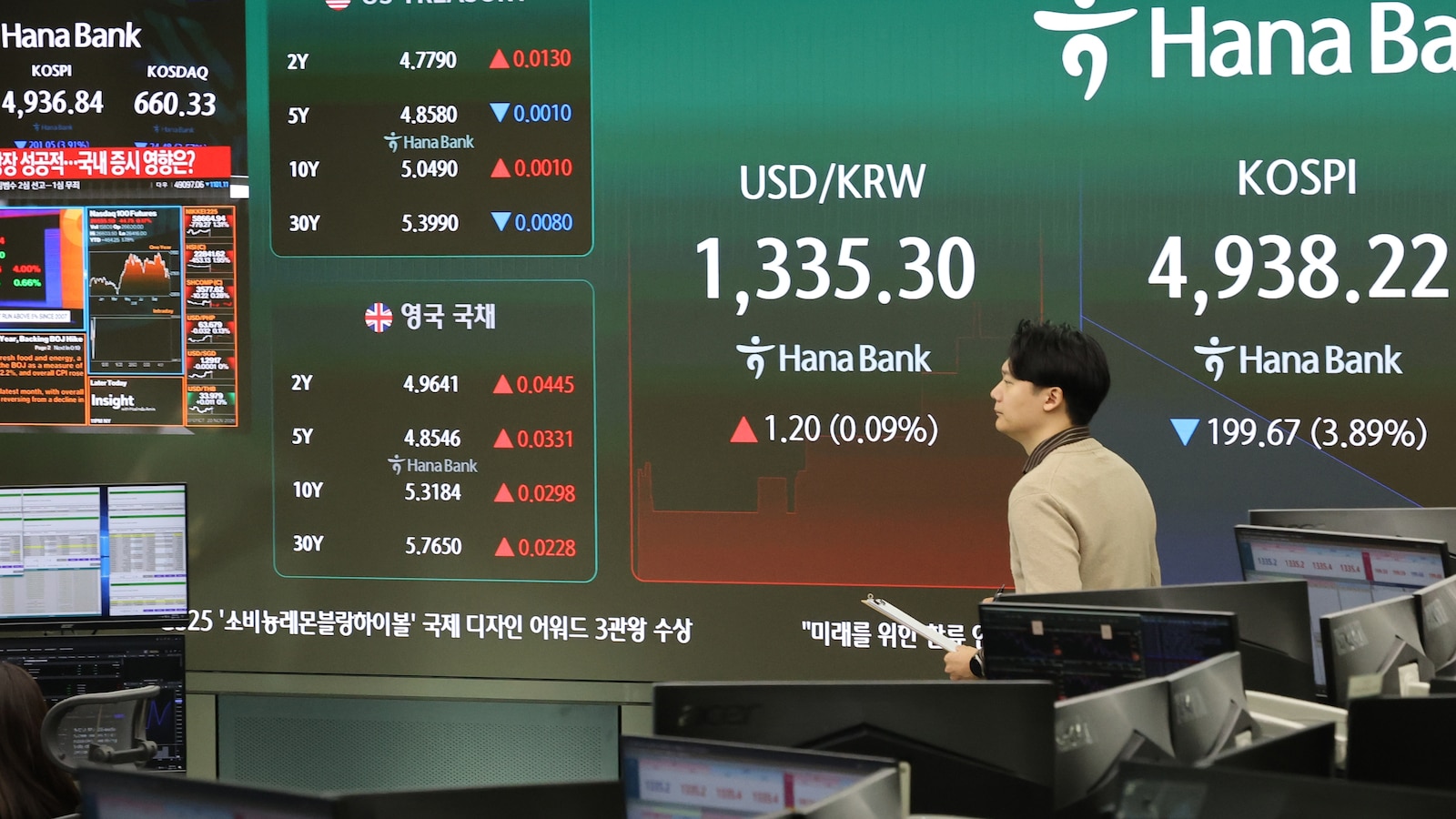
Asian stock markets have recorded their worst week since 2020, with broad declines across AI-related and semiconductor stocks despite Anthropic's strong IPO debut. The contagion from Wall Street's tech rout has spread globally, signaling that the AI correction is not a U.S.-only phenomenon.
Key points
Market impact. Asian semiconductor and chip equipment makers have been hit particularly hard, with investors reassessing the pace of AI capex spending across the region. The weakness in Asia could further pressure U.S. tech stocks when markets reopen, creating a negative feedback loop.
Broader implications. The global nature of the selloff suggests that AI investment enthusiasm has cooled worldwide, not just in the U.S. This could slow the international expansion of data center buildout and chip manufacturing that had been expected to drive growth for years.