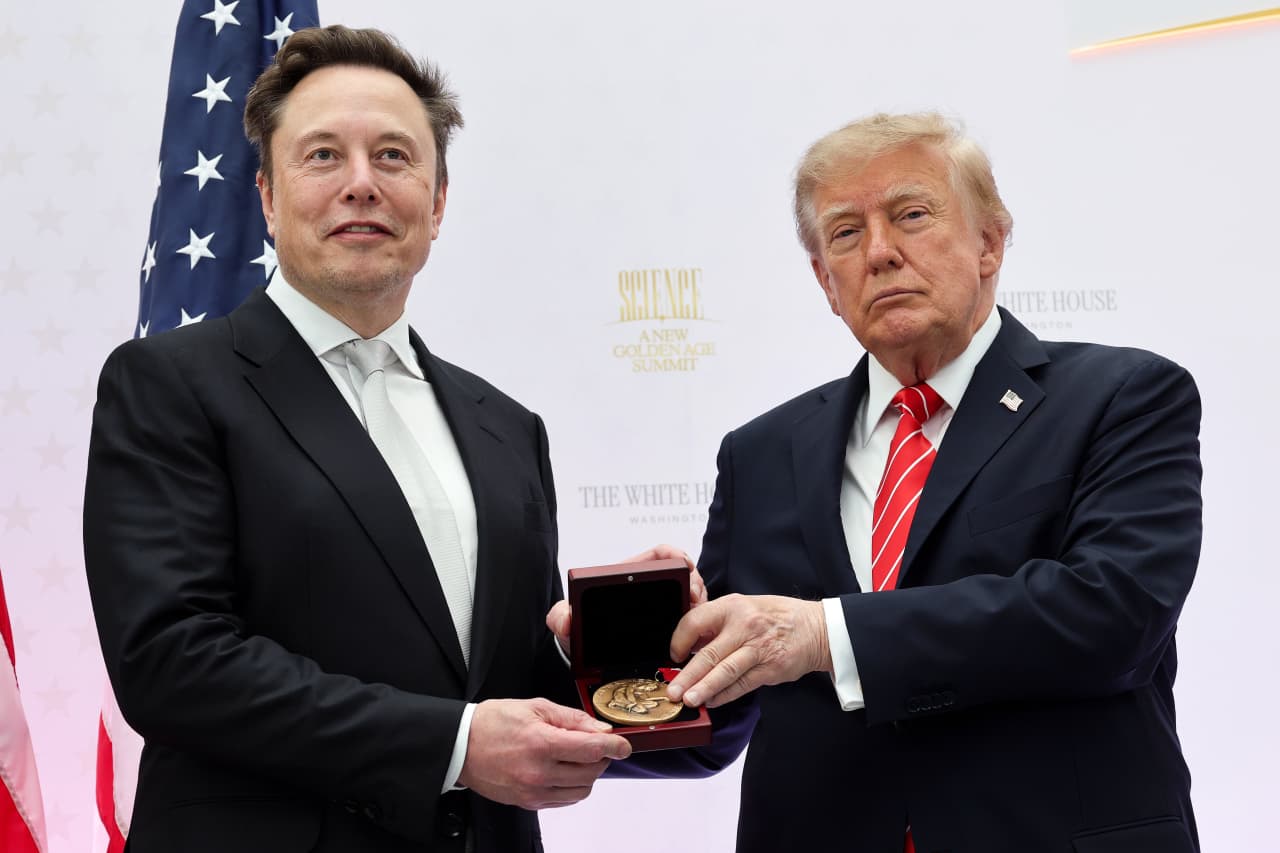
The Trump administration announced sweeping new tariffs across 14 economies, including a 20% increase on Chinese goods and levies on the European Union, Japan, and other major trading partners. The administration framed the move as countering unfair trade practices and excess industrial capacity abroad.
Key points
Market impact. Tariff announcements triggered sharp losses across equity markets, particularly in export-sensitive sectors and multinational corporations with Asian supply chains. Currency markets repriced risk for yuan, euro, and yen as traders priced in retaliatory measures and margin compression for affected exporters.
Broader implications. The tariff escalation signals a return to protectionist trade policy and raises stagflation risks by pushing input costs higher while constraining global growth. Emerging markets like India gain relative advantage as tariffs on Bangladesh, Cambodia, and Thailand create competitive openings.
Sources (5)Foreign Policy, CBS News, The Guardian Business +2
S&P Global Ratings warned it may cut Nvidia's credit rating by one notch, citing rising management and governance risks. The warning follows Jensen Huang's reinstatement as CEO and ongoing scrutiny around his personal conduct and ties to Chinese businesswoman Alice Huang, whose companies hold significant AI server inventory in China.
Key points
Market impact. A downgrade would increase Nvidia's borrowing costs and signal institutional concern about the company's control environment at a moment when NVDA stock has already faced AI sector volatility. The governance flag undermines confidence in the chipmaker's capital allocation and risk management despite its dominant market position.
Broader implications. The rating warning exposes reputational and geopolitical vulnerabilities in the AI supply chain, particularly around Chinese exposure and executive accountability. It raises questions about whether the AI boom's concentration in a handful of firms creates systemic governance risks.
The Federal Reserve confirmed that inflation has not improved ahead of its December policy decision, with the PCE deflator rising again in October. Fed officials signaled the central bank remains on track to raise rates next month despite earlier hopes that price pressures would ease.
Key points
Market impact. The hawkish inflation narrative pressures bond yields higher and constrains equity valuations, particularly in rate-sensitive sectors like technology and consumer discretionary. A December hike locks in higher real rates for longer, reducing the present value of future corporate earnings.
Broader implications. Persistent inflation undermines the Fed's credibility and extends the tightening cycle, raising recession risks if demand destruction lags price stickiness. The AI boom's contribution to inflation through energy and semiconductor demand complicates the central bank's exit strategy.
The artificial intelligence boom is driving inflation through energy consumption and semiconductor demand while simultaneously raising the probability of a sharp economic contraction if capital spending on AI infrastructure proves unsustainable. Hedge fund managers and economists remain divided on whether the AI cycle can support current valuations without a demand cliff.
Key points
Market impact. Data center and semiconductor stocks remain attractive to long-term investors despite near-term volatility, but high-yield bonds face compression risk if the AI boom deflates. The concentration of AI capex in a handful of mega-cap tech firms creates tail risk for the broader equity market.
Broader implications. A sharp reversal in AI spending would ripple through the entire economy, affecting power grids, real estate, and labor markets. The debate over AI's true productivity impact will define macro policy and asset allocation for the next 18 months.
Bullish +162 sourcesbank of korea · rate hike · inflation
The Bank of Korea raised its benchmark rate by 25 basis points to 3.25% in its final meeting of the year, marking the third hike in 2026. The central bank upgraded its growth forecast, citing the AI boom as a tailwind for the economy while inflation remains above the 2% target.
Key points
Market impact. Higher Korean rates support the won and attract carry trades, benefiting Korean exporters and semiconductor firms like Samsung and SK Hynix. The rate hike cycle signals confidence in Asia's AI leadership and may attract foreign capital into Korean equities and fixed income.
Broader implications. South Korea's tightening diverges from other developed economies and reflects the country's outsized exposure to AI capex and semiconductor demand. The move positions Seoul as a beneficiary of the AI boom while managing inflation risks.
Strong bearish −623 sourcesukraine · russia · casualties
Pro-Ukraine hackers obtained Russian government data indicating at least 490,000 Russian soldiers have died in the Ukraine war since the February 2022 invasion, with some estimates reaching 700,000. The figures exceed all combined U.S. military deaths since World War I.
Key points
Market impact. Confirmed casualty figures strengthen the narrative of Russian military exhaustion and may embolden Western defense contractors and NATO allies to increase military aid commitments. Defense stocks and European equities could see modest support from expectations of sustained military spending.
Broader implications. Massive Russian losses signal a grinding war of attrition with no near-term resolution, sustaining geopolitical risk premiums in energy and commodities. The human cost raises domestic political pressure on Moscow and may influence negotiations or escalation dynamics.
Strong bearish −573 sourcesmicrosoft · outlook · outage
Microsoft declared a "Code Red" emergency response after a 24-hour outage knocked Teams, Outlook, Copilot, and other services offline for most of its 420 to 450 million users. The outage stemmed from an undetected Windows defect and represents the most disruptive service failure in the company's history.
Key points
Market impact. The outage raises questions about Microsoft's cloud infrastructure resilience and operational risk management at a moment when the company is betting heavily on AI integration. Enterprise customers may accelerate contingency planning and diversification away from Microsoft's ecosystem.
Broader implications. The incident exposes systemic risks in cloud computing concentration and highlights the vulnerability of digital economies to single points of failure. Regulatory scrutiny of Microsoft's market dominance will likely intensify.
Sources (3)The Verge, Fox News US, New York Post Business
Elon Musk and SpaceX announced they will donate one newly issued Class A share to every active Trump account, with Musk personally matching the gift. The pledge totals approximately $17.8 billion and represents an unprecedented corporate-political alignment.
Key points
Market impact. The donation signals Musk's deep integration with Trump's political apparatus and raises questions about potential quid pro quo arrangements involving SpaceX contracts, regulatory relief, or tariff exemptions. SpaceX's private valuation and Musk's concentrated wealth position amplify the political economy implications.
Broader implications. The pledge exemplifies the fusion of tech oligarchy and political power, setting a precedent for corporate political engagement that may reshape regulatory and tax policy. It underscores the concentration of economic and political influence in a handful of billionaires.
U.S. Senators Elizabeth Warren and Chris Van Hollen, among others, have called on the SEC to eliminate recent exemptions granted to cryptocurrency and tokenized securities offerings. The senators argue the exemptions undermine investor protection and create regulatory arbitrage opportunities.
Key points
Market impact. The push for stricter crypto regulation pressures digital asset prices and threatens the business models of crypto exchanges and tokenization platforms. Bitcoin and Ethereum face headwinds if Congress moves to tighten SEC oversight.
Broader implications. The regulatory pressure reflects growing bipartisan concern about financial stability risks and retail investor protection in unregulated digital markets. A tightening regulatory environment could slow innovation in blockchain finance but reduce systemic risk.