The Trump administration announced a sweeping tariff package targeting 14 economies including China, the European Union, Japan, and others, citing unfair trade practices. China and other trading partners have already protested and signaled retaliatory measures.
Key points
Market impact. Tariff uncertainty has weighed on equities and currency markets. Export-dependent sectors—particularly automotive, technology, and industrial goods—face margin compression. European and Asian bourses have sold off on the news; U.S. inflation expectations have ticked higher.
Broader implications. This escalation signals a shift toward protectionism as a centerpiece of Trump's second-term economic policy. Supply chain fragmentation will accelerate, and multinational corporations will face higher compliance costs and route-planning complexity.
SAP is planning to eliminate at least 10,000 positions across all departments as part of a major AI overhaul, affecting roughly 9% of its global workforce. The cuts reflect the software giant's pivot toward generative AI and automation.
Key points
Market impact. SAP shares may initially rally on cost-cutting expectations, but the announcement signals broader enterprise software sector headwinds. Competitors face similar margin pressures and restructuring demands, which could depress hiring across tech services and consulting.
Broader implications. This is the largest tech layoff wave tied explicitly to AI adoption. It underscores that the AI boom's productivity gains come with severe labor displacement, particularly in back-office and mid-tier technical roles.
Neutral −154 sourcesnvidia · jensen huang · alice huang
Federal investigators are examining Megaspeed and Alice Huang—a Chinese businesswoman linked to Nvidia CEO Jensen Huang's affair—as part of a broader national security probe. Huang-linked firms are reported to have listed $270 million in AI server sales into China, raising espionage concerns.
Key points
Market impact. Nvidia's stock remains volatile amid uncertainty over potential export restrictions, leadership continuity, and regulatory fallout. Any finding of unauthorized chip transfers to China could trigger OFAC penalties and accelerate U.S. semiconductor export controls.
Broader implications. This case crystallizes the intersection of geopolitical competition and corporate governance. It signals heightened U.S. scrutiny of tech executive conduct and supply chain linkages to China, potentially reshaping how semiconductor firms manage international relationships.
Sources (4)TechCrunch, CBS News, New York Post Business +1
Neutral −153 sourcessouth korea · interest rate · inflation
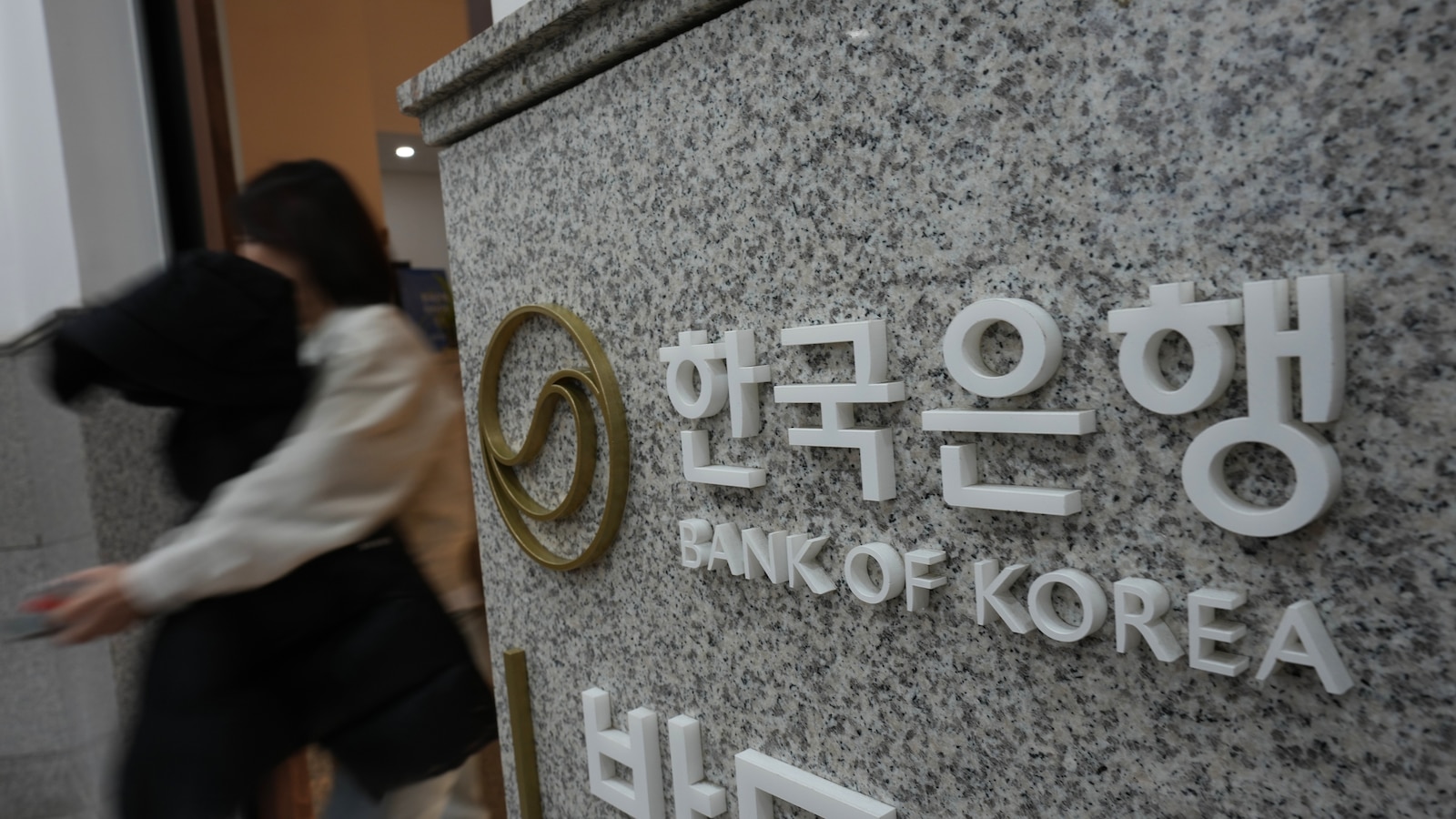
The Bank of Korea raised its benchmark rate by 25 basis points to 3.25%, marking the third hike since July and the highest level in two years. The move targets persistent inflation even as the AI boom drives growth forecasts higher.
Key points
Market impact. Higher Korean rates support the won and make Korean equities more attractive on a yield basis, but increase borrowing costs for tech and semiconductor firms. Samsung and SK Hynix face margin pressure from both rate hikes and AI-driven capex cycles.
Broader implications. South Korea's tightening mirrors broader central bank hawkishness despite AI-driven growth. This suggests policymakers view inflation as structural, not transitory, and are willing to sacrifice near-term growth to anchor expectations.
Sources (3)ABC News, CNBC Top Stories, WSJ Economy
Neutral 03 sourcesecb · pablo hernández de cos · lagarde
The European Central Bank has selected Pablo Hernández de Cos, the BIS chief and Spanish economist, as its next president following Christine Lagarde's early exit. De Cos has previously questioned stablecoin viability for mass payments.
Key points
Market impact. The transition occurs amid political uncertainty and choppy eurozone growth. De Cos's appointment may signal a more hawkish stance on digital assets and a continuation of rate discipline, which could support the euro but pressure growth-sensitive equities.
Broader implications. This leadership change underscores the ECB's commitment to orthodox monetary policy even as Europe faces stagflation risks. De Cos's skepticism of crypto and fintech innovation may shape regulatory approaches across the EU.
Sources (3)Cointelegraph, New York Times Business, CNBC Economy
Norse Atlantic, the Norwegian low-cost carrier, has suspended all flights and warned its board may file for bankruptcy without urgent short-term financing. The airline's share price collapsed 81% as soaring fuel costs and operational pressures became unsustainable.
Key points
Market impact. The carrier's collapse removes a competitor from transatlantic routes, potentially benefiting legacy carriers like United, Delta, and IAG. Fuel hedging strategies across the airline sector are under scrutiny; energy prices remain a key risk.
Broader implications. Norse Atlantic's failure demonstrates that low-cost models remain vulnerable to commodity shocks and macroeconomic headwinds. It signals consolidation pressure in budget aviation and raises questions about the viability of newer entrants in capital-intensive industries.
Sources (4)Fox News World, BBC Business, CNBC Top Stories
Strong bullish +663 sourcesconsumer confidence · gas prices · election
The Conference Board's consumer confidence index jumped to 103.3 in November from 91.9 in October, marking a sharp rebound. The surge reflects relief from election-related uncertainty and continued declines in gasoline prices.
Key points
Market impact. Higher confidence typically supports discretionary spending and retail equities heading into the holiday season. Futures markets rallied on the data; however, inflation concerns persist, capping upside for rate-sensitive sectors.
Broader implications. The rebound suggests political clarity and energy price relief are offsetting wage stagnation and credit stress. However, underlying fragility remains—food bank demand is surging, indicating uneven income distribution and persistent household strain below headline confidence metrics.
Elon Musk and SpaceX announced they will donate roughly $17.8 billion in newly issued Class A shares to "Trump accounts"—one share per active account from SpaceX and a matching share from Musk personally. The pledge represents an extraordinary political and financial commitment.
Key points
Market impact. The donation structure dilutes existing SpaceX shareholders but signals Musk's confidence in the company's valuation and his alignment with Trump administration policies. It may accelerate government contracts and regulatory favoritism toward SpaceX, benefiting the company's launch cadence and profitability.
Broader implications. This move exemplifies the blurring of corporate, political, and personal interests in the Trump era. It raises governance questions and signals that Musk expects substantial policy returns—likely including defense contracts, regulatory relief, and favorable space industry treatment.
Sources (3)CBS Money Watch, New York Post Business, Market Watch
Food banks and resource centers report surging demand this Thanksgiving season, with nearly 6.5 million fewer Americans receiving federal food assistance. Some facilities are seeing visits exceed pandemic-era peaks as high costs and benefit restrictions squeeze vulnerable households.
Key points
Market impact. Rising food insecurity signals weakening household purchasing power and potential drag on consumer spending in Q4. Discount retailers and value-oriented grocers may see traffic gains, while premium food and restaurant stocks face headwinds from lower-income consumer pullback.
Broader implications. Despite headline consumer confidence gains, this data reveals a bifurcated economy where lower-income households face acute hardship. It underscores the limits of headline economic metrics and suggests recession risks remain embedded in the labor market and wage structure.